Archive for the ‘Recipes’ Category

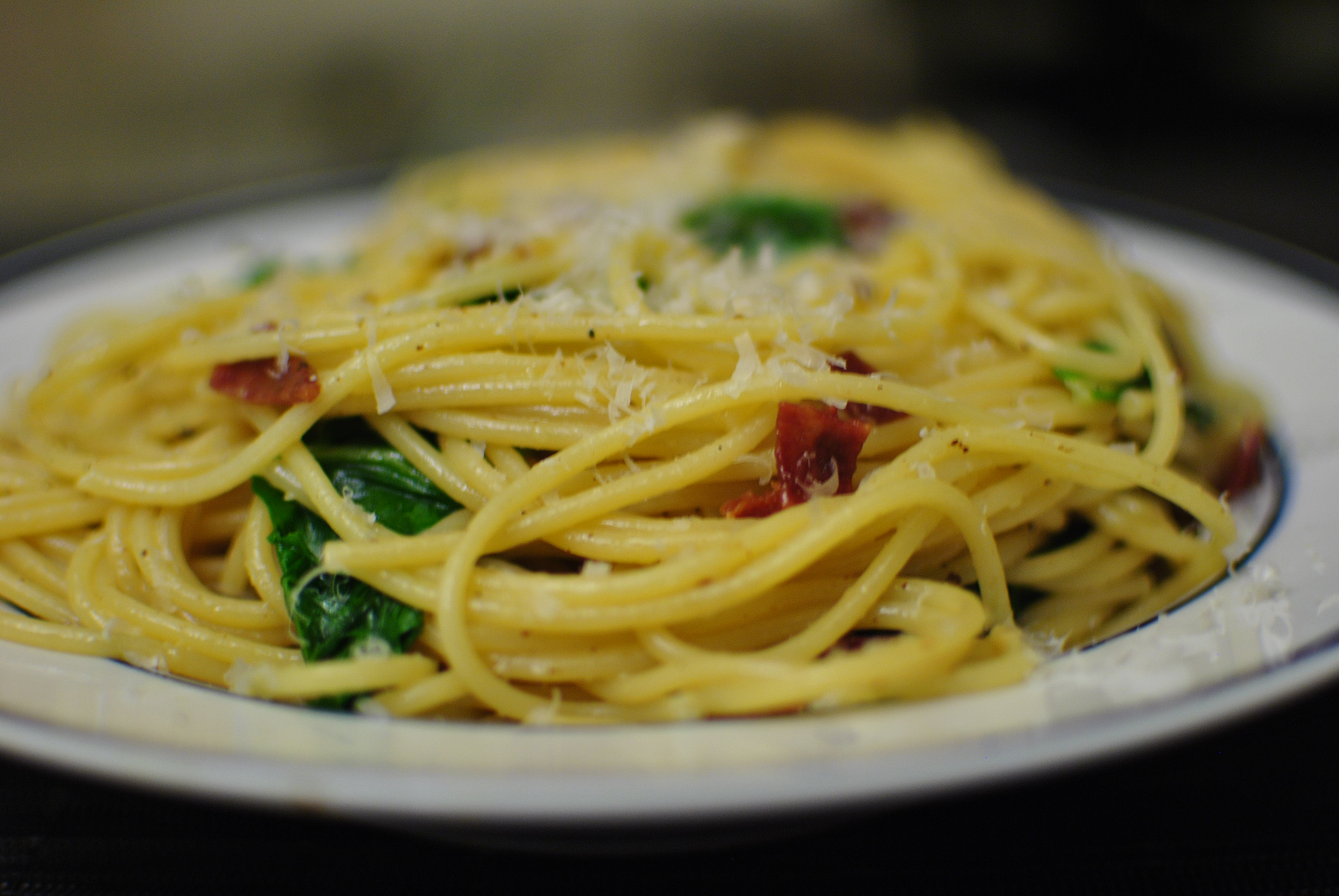
Spaghetti “Carbonara” with Turkey Bacon and Sauteed Greens

Thursday, July 1st, 2010 by virginia

Greens

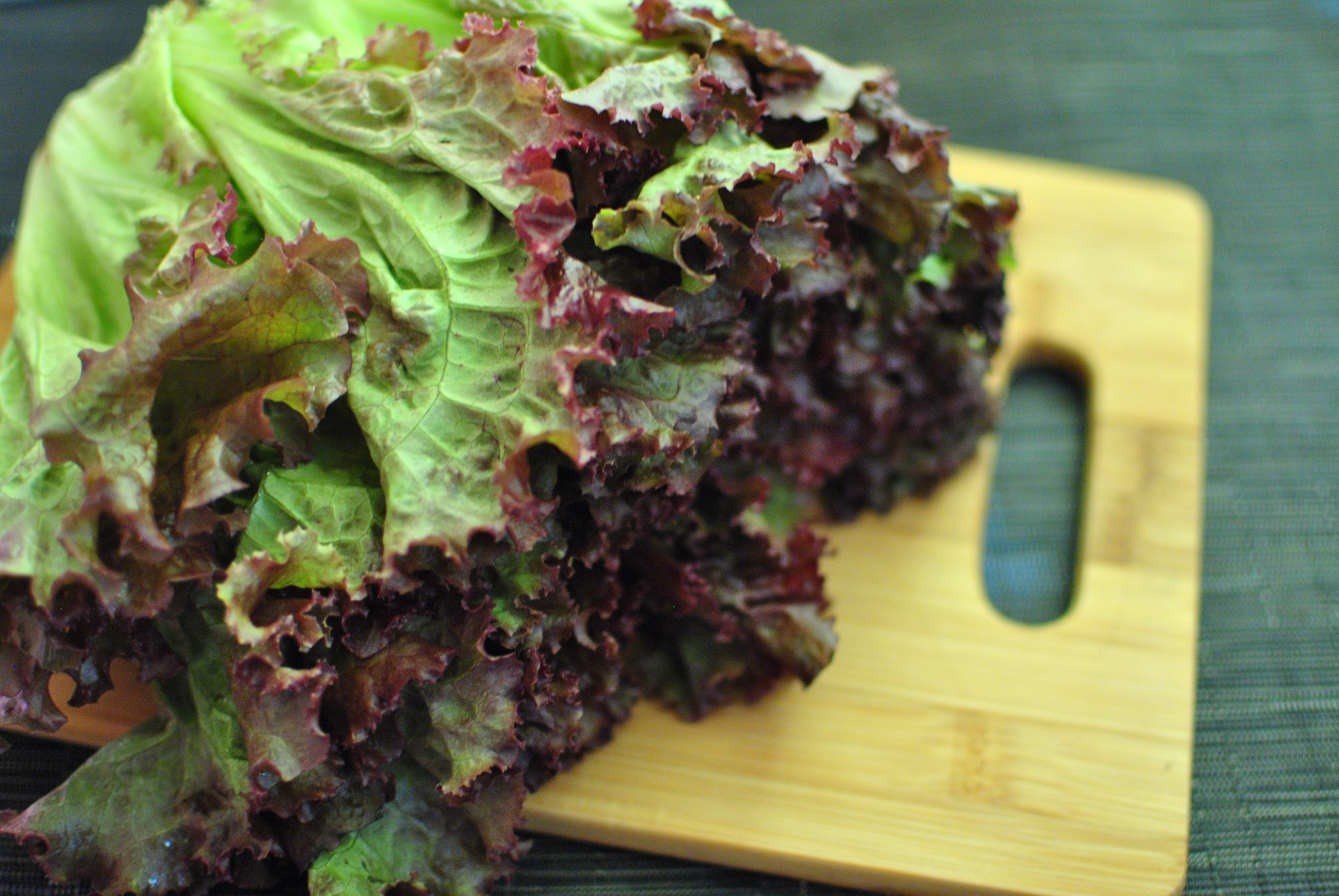
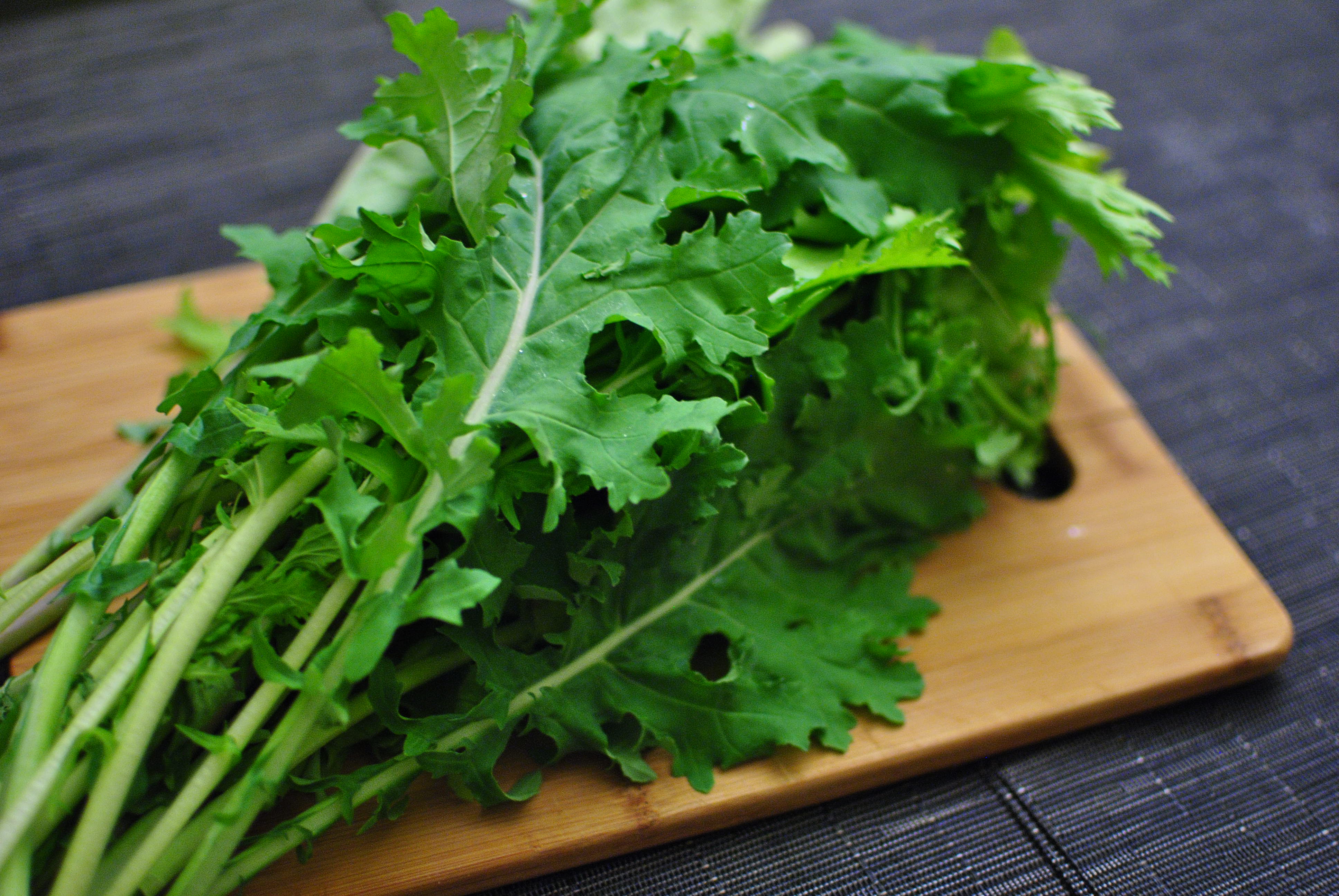
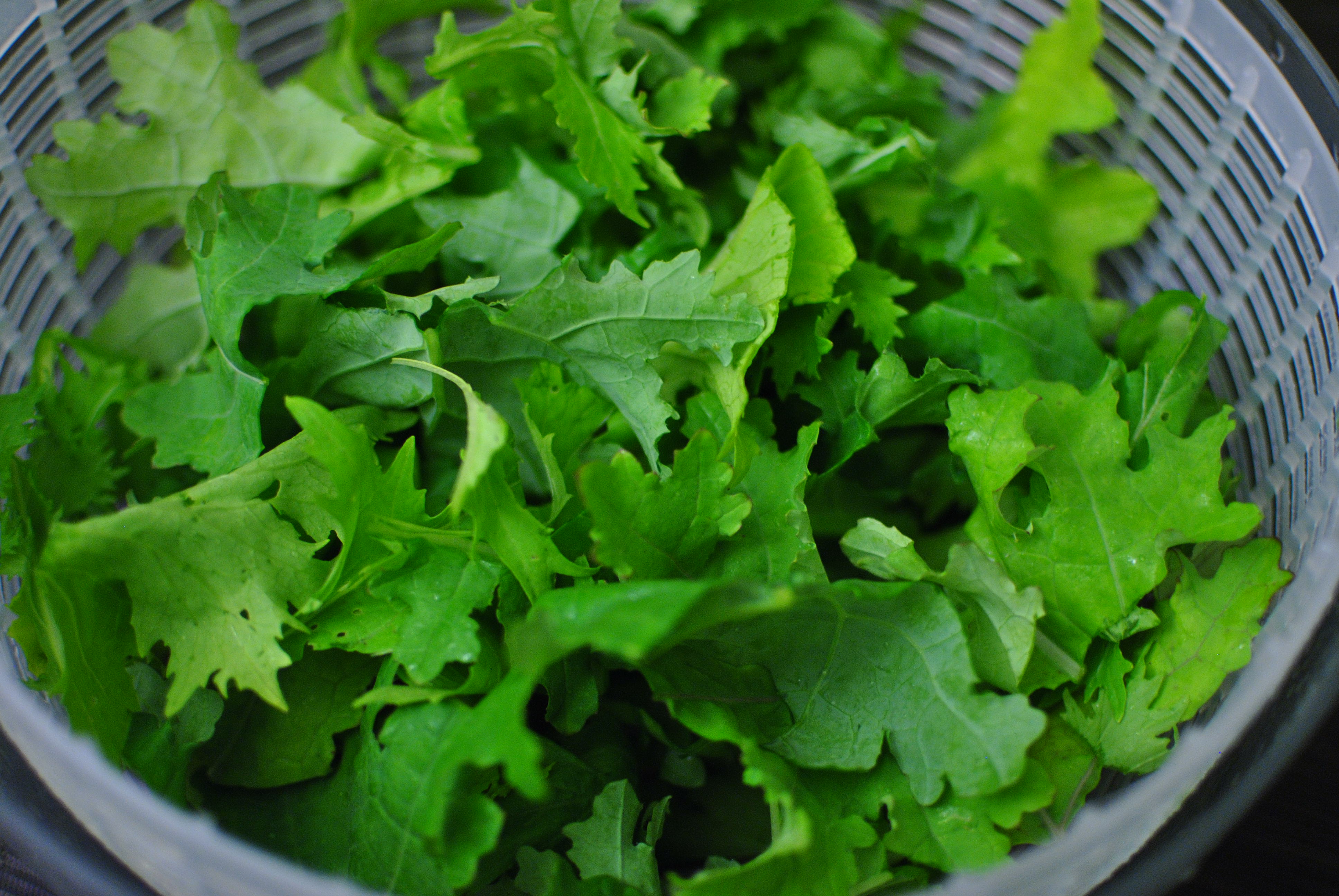
Going back to our first batch of CSA goodies, we got 3/4 lb of “greens”. I’m not sure exactly what kind of “greens” these are, but they had a pretty tough and thick stem running through the middle. The leaves were also on the thicker side and seemed pretty hearty, so we decided to saute them instead of eating them raw. I trimmed the stems and roughly chopped the leaves into 1 inch pieces.

Cut, washed, and ready to go

We wilted the leaves in some olive oil with minced garlic, and then set them aside. Instead of having plain sauteed greens, we decided to mix them into our recipe for spaghetti carbonara. To make the carbonara sauce, we cooked about 10 ounces of turkey bacon in a large pan until rendered and crispy. In the meantime, put a pot of spaghetti on to boil.

After it was rendered, we scooped out the bacon and deglazed the pan with a bit of white wine, about a cup. We let the wine reduce until the sauce had a thicker consistency. Meanwhile, we cracked two eggs into a large bowl and beat them until smooth. After draining the pasta, we dumped it into the pan with the bacon/wine sauce and stirred it around.

Using some of the hot pasta water, I tempered the eggs so that they wouldn’t scramble when we poured the hot pasta mixture into the bowl. I stirred everything quickly while Josh slowly poured the pasta into the bowl, making sure that the egg coated all of the noodles. Then we added the cooked bacon and sauteed greens and tossed everything together thoroughly. Make sure to taste and season with salt as needed. The greens added a nice vibrant color to the pasta.

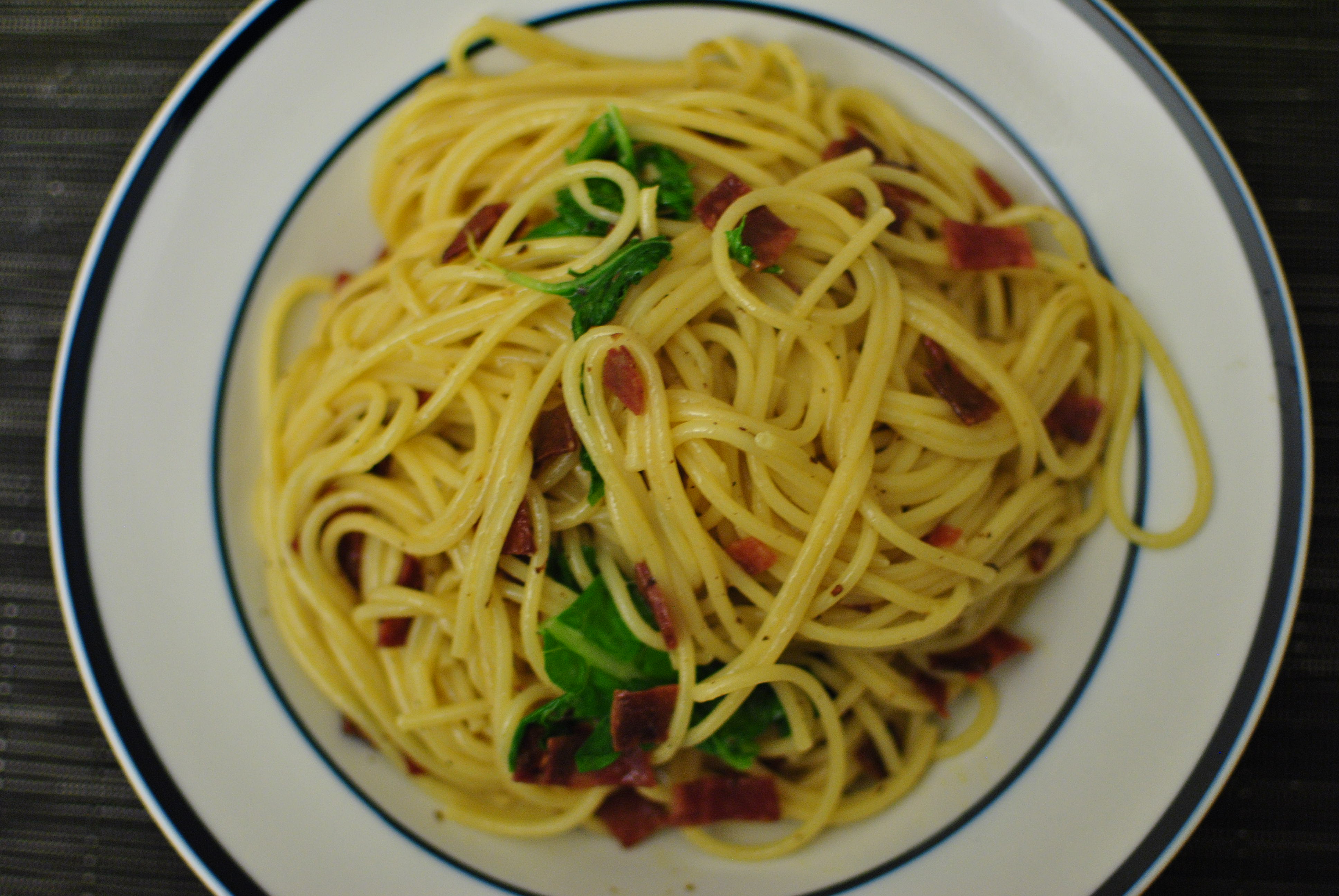
Our version of spaghetti carbonara

To finish it off, we grated some parmesan cheese on top and a few cranks of fresh black pepper. The carbonara sauce was lighter than other versions, but still had that nice glossy, velvety richness from the egg. It’s definitely an easy dish to make, and adding greens to the mix just somehow makes you feel better about eating a sauce made from bacon. At least it was turkey bacon, right? That’s what we like to tell ourselves…

Mmm bacon (and greens!)

Minty Mojitos

Monday, June 28th, 2010 by virginia

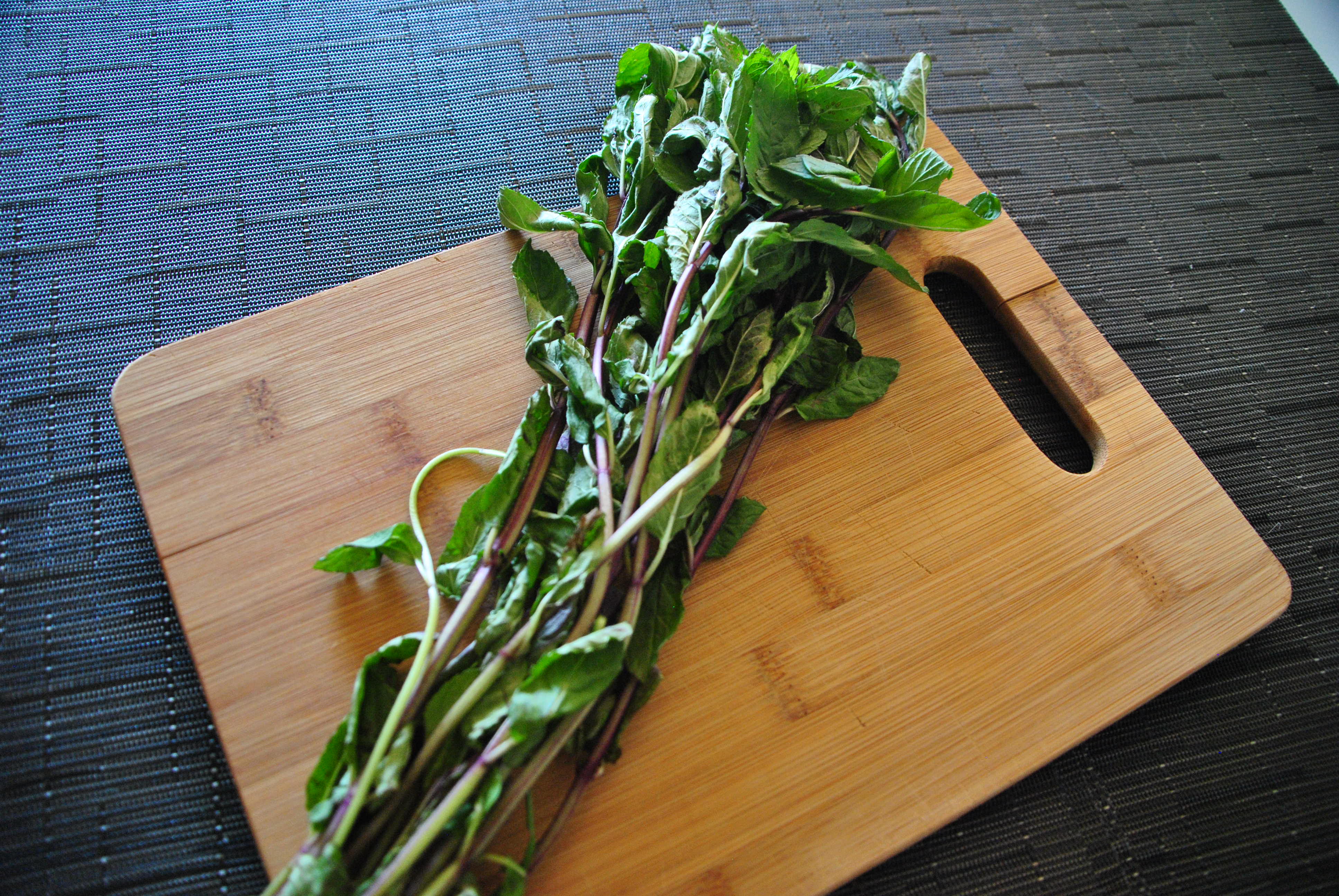
Minty mint

So what do you do with a third of a pound of mint? That’s the dilemma we faced when we got our first CSA share. Josh and I like mint but don’t really cook with it too often, plus we still have our mint plant from last year that is surprisingly still alive and producing leaves. We decided to go with the more obvious route and made a few batches of minty mojitos.

To make a mojito, muddle together a handful of mint leaves, a teaspoon of sugar, and the juice of half a lime. Really squish it all together for about a minute to extract every last bit of flavor. Add rum into the container where you’ve been muddling the other ingredients and swirl it around a bit. We like two shots per drink. Pour it all into a cocktail mixer with ice. Shake well, pour into glasses filled with ice, top off with club soda, garnish, and serve.

Lime mojitos

We also made mojitos with lemons (are they still considered to be mojitos?) when we accidentally ran out of limes. Mint lemonade is a classic summer drink, and adding rum into the mix only made it better. Vodka would probably do the trick as well.

Lemon mojitos

The mint really works well with the citrus, and you can boost up the flavor even more with citrus-flavored rum. The amount of rum/sugar/club soda can vary between personal tastes, but adding a lot of fresh mint leaves really brightens up the drink. It’s perfect for these hot summer days!
Roasted Bok Choy

Thursday, June 24th, 2010 by virginia

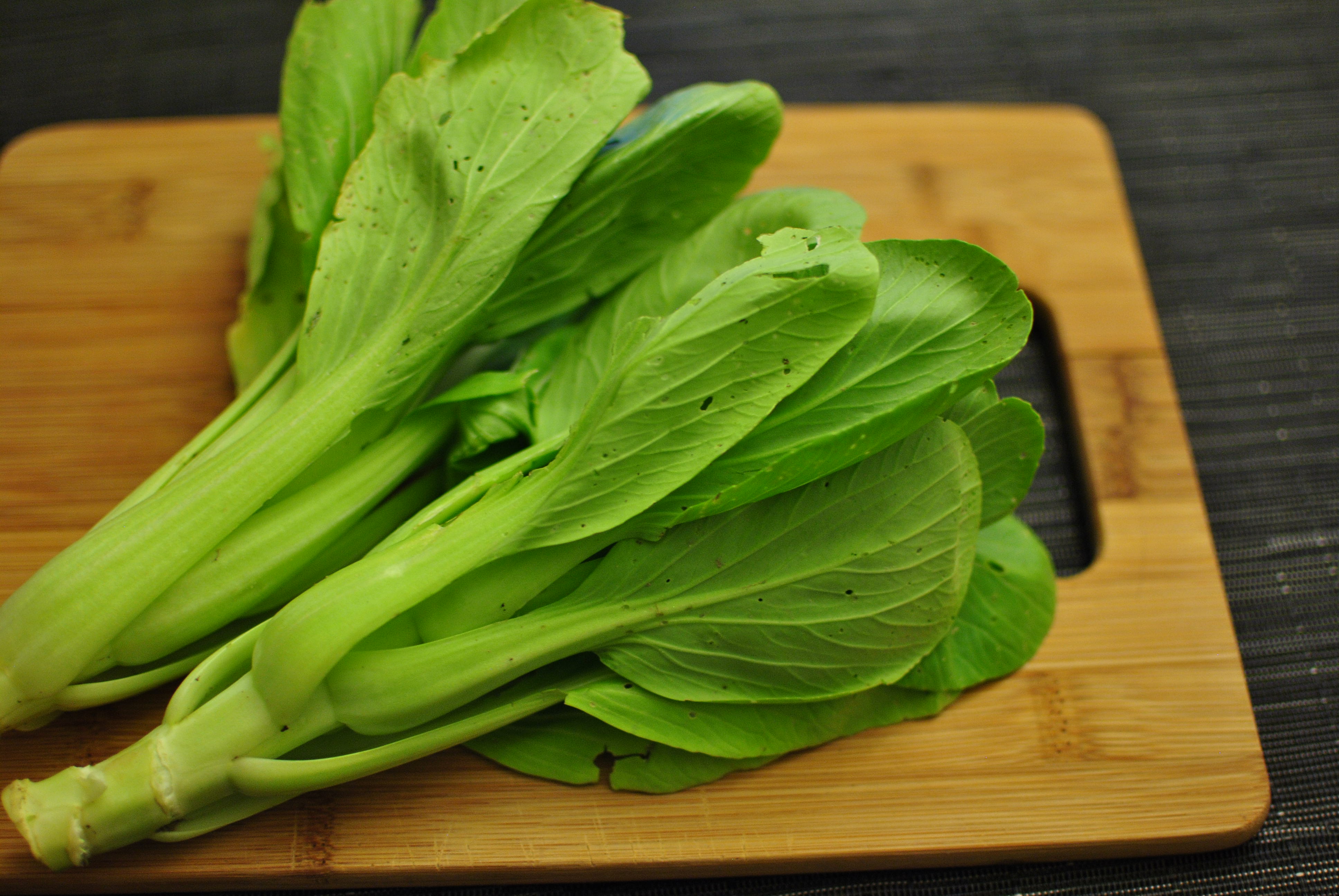
Bok choy

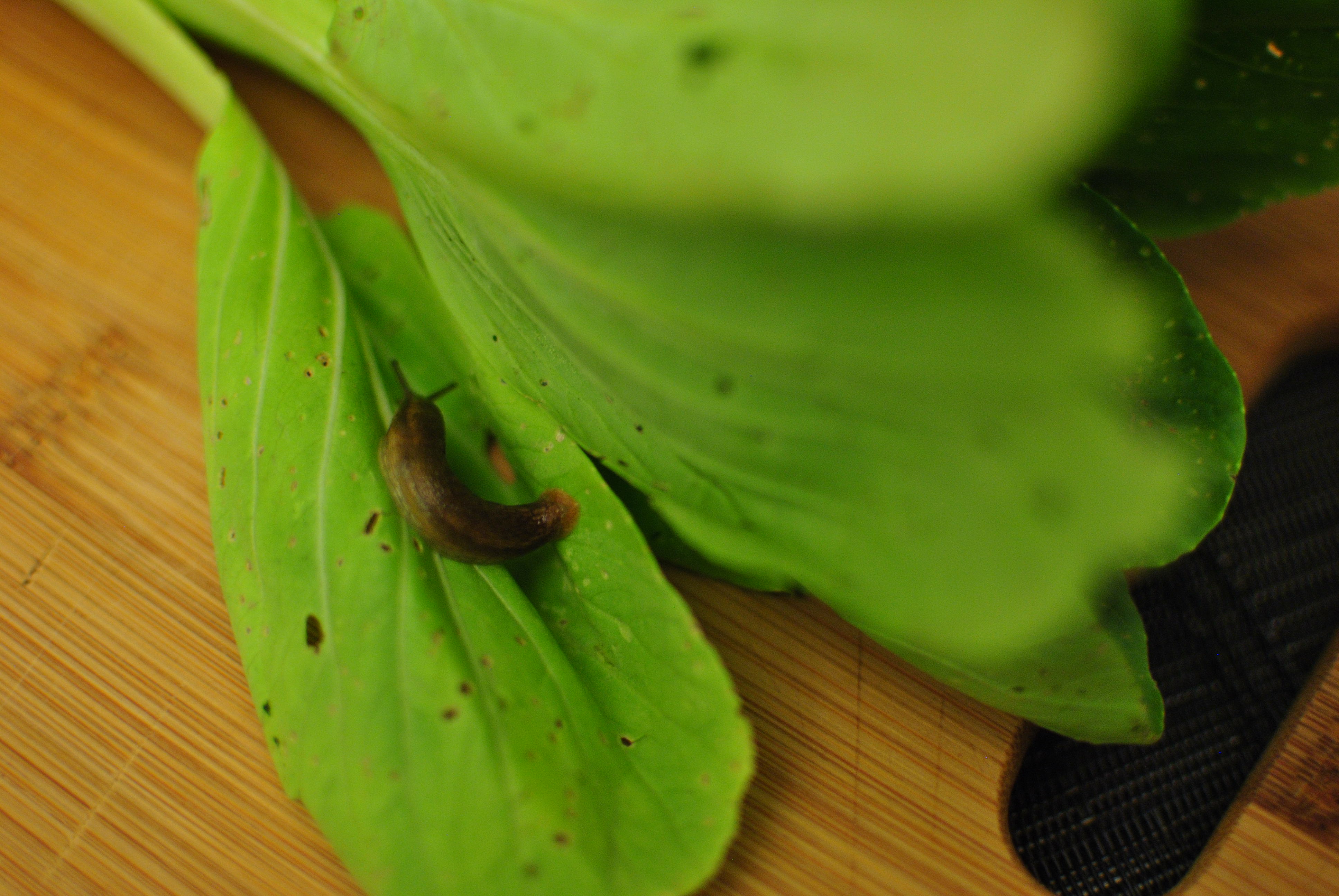
Based on a recommendation by commenter Sean, we took our CSA bok choy and roasted it in the oven. Our usual method of preparing bok choy is to chop it up into smaller pieces and sautee it with olive oil and garlic, but cooking it in the oven seemed much simpler and quicker. Our first step was to separate the leaves from the core, but as I attempted to do so, I found a little surprise…

Well hello there Mr. Slug!

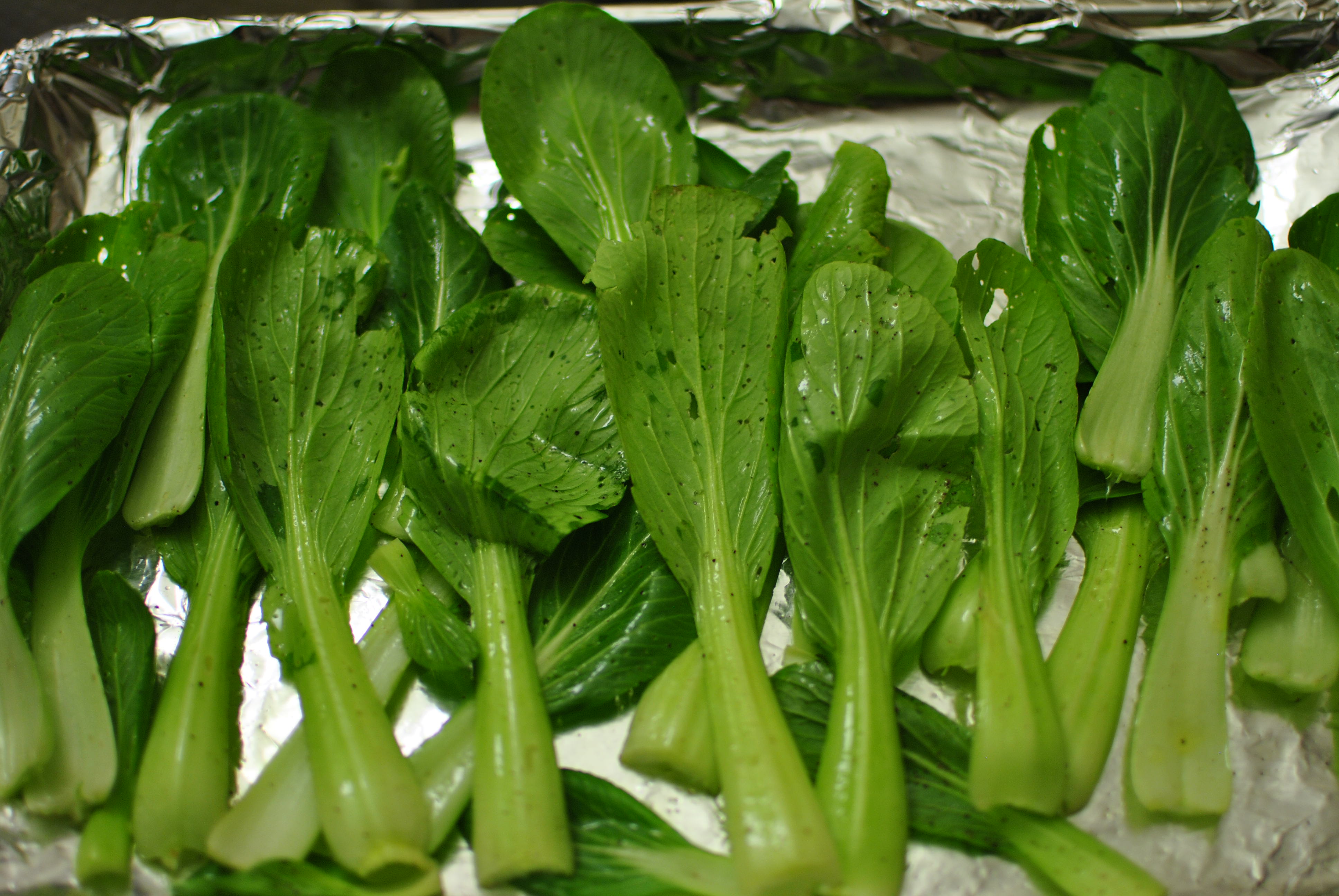
I was a little freaked out but hey, this stuff really is coming straight from a farm so it should be expected. I removed Mr. Slug and carefully washed the leaves. After drying them thoroughly, I tossed them with a bit of olive oil, salt, and pepper, then laid them out on a large baking sheet.

Bok choy on a baking sheet ready to go into the oven

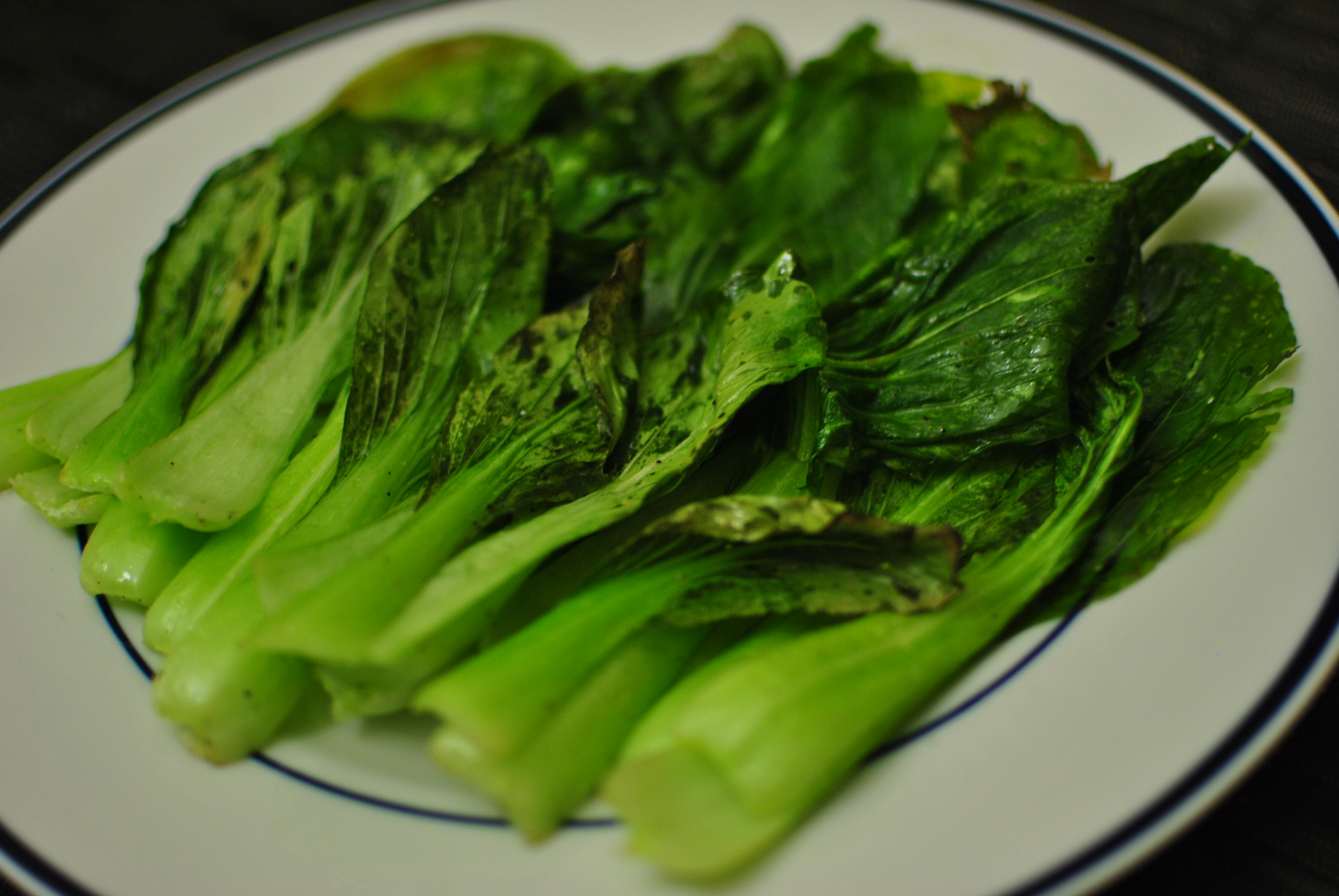
I placed the baking sheet in the oven preheated to 450 degrees and kept it in for about 10 minutes, watching it carefully. When the edges of the leaves started to visibly crisp up, I pulled them out and seasoned the bok choy with more salt and pepper, plus a few squeezes of fresh lemon juice.

Oven roasted bok choy

Wow the bok choy was awesome! It was cooked through but still crisp and juicy. The lemon juice added a brightness to the already fresh flavor, and it really couldn’t have been more simple to prepare. We covered the baking sheet in foil first, so clean up was a breeze – just pull off the foil and toss in the trash! It was a great side dish to our meal, and I have a feeling we’ll be cooking bok choy like this from now on.

Light Caesar Salad

Thursday, June 17th, 2010 by virginia

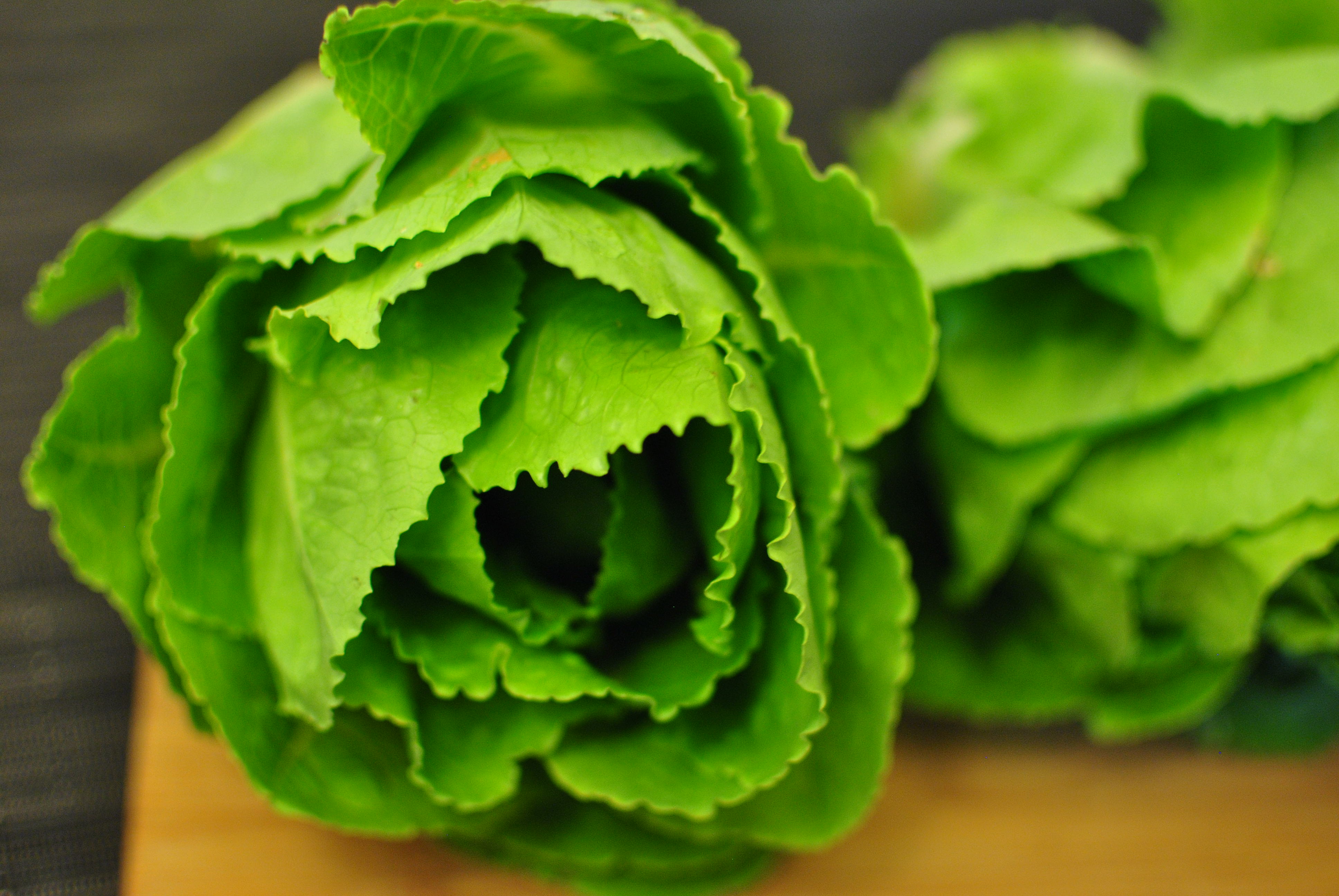
Gorgeous romaine lettuce

As part of our first CSA share, we received two medium-sized heads of romaine lettuce. They were really gorgeous – vibrant green, fresh, and crisp. We wanted to make caesar salad with it, but our usual homemade dressing is pretty heavy and thick. We didn’t want to overwhelm the lettuce and lose the fresh flavor so we decided to lighten it up a bit by omitting the egg and garlic and putting in a smaller amount of anchovy paste.

The dressing really couldn’t be simpler, and I made it in my knock-off magic bullet blender. Just throw the following ingredients in, eyeballing the amounts:

-Juice of one lemon
-About a teaspoon of anchovy paste
-A dash of worcestershire sauce
-Grated parmesan cheese
-Salt
-Pepper
-Olive oil

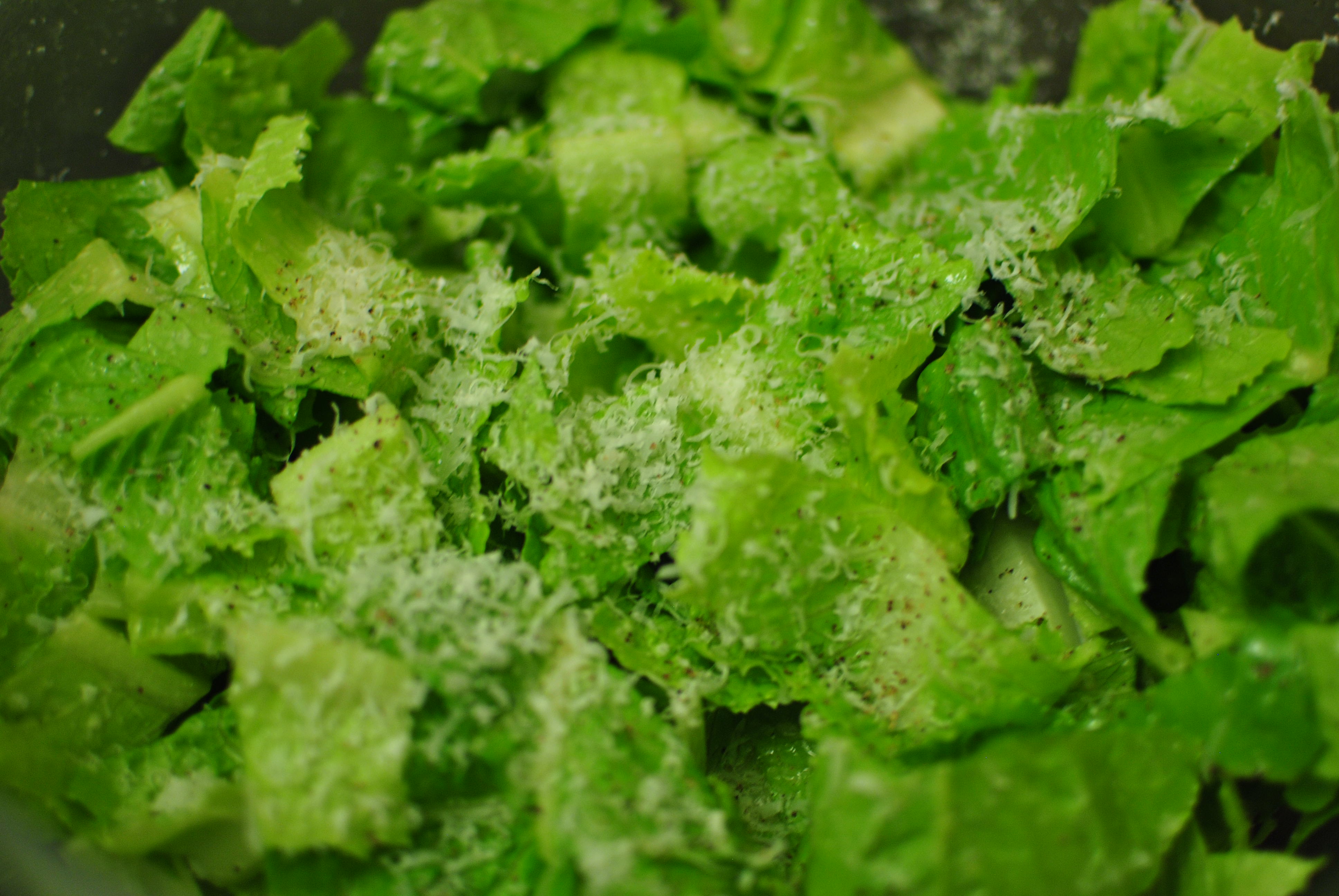
The amount of olive oil depends on how thick you want it to be. I started with about a quarter of a cup and then increased it to make the dressing a bit thicker, so that it would cling to the leaves. Blend, and then toss with the leaves, which we cleaned and chopped into 1 inch pieces. Grate some extra parmesan over the top, and a few grinds of pepper.

Lightly dressed leaves

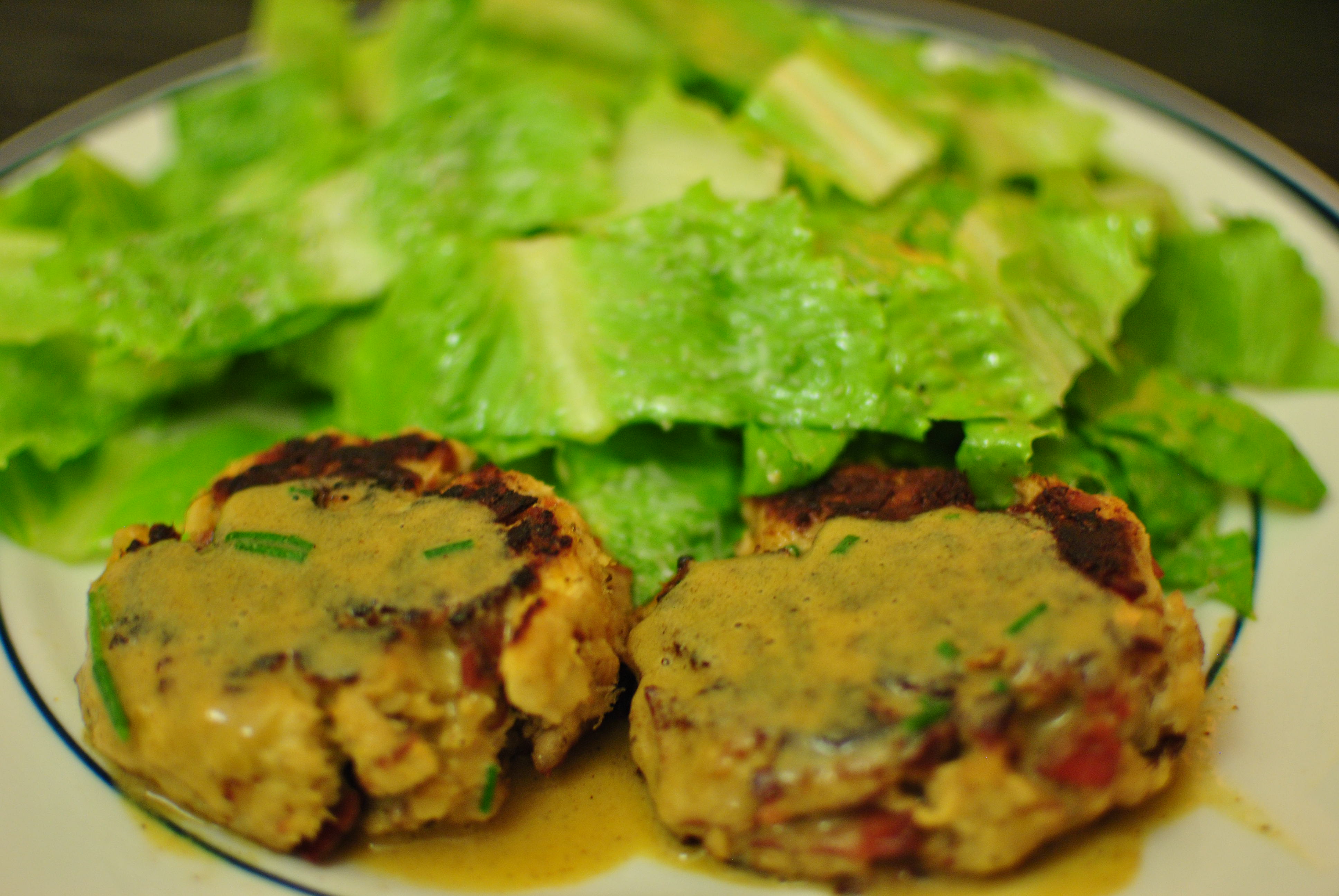
The salad was really fantastic, with the lemon brightening everything up. The lettuce itself was the best romaine we’ve ever eaten, crisp and flavorful, not watery and bland like the romaine you get from the supermarket. We served the salad alongside some tilapia cakes that Josh made extra special by adding in some bits of crunchy turkey bacon. It was a light meal but packed with flavor, and so very easy to prepare.

Tilapia cakes with caesar salad

Garlic Scape Pesto

Friday, June 11th, 2010 by virginia

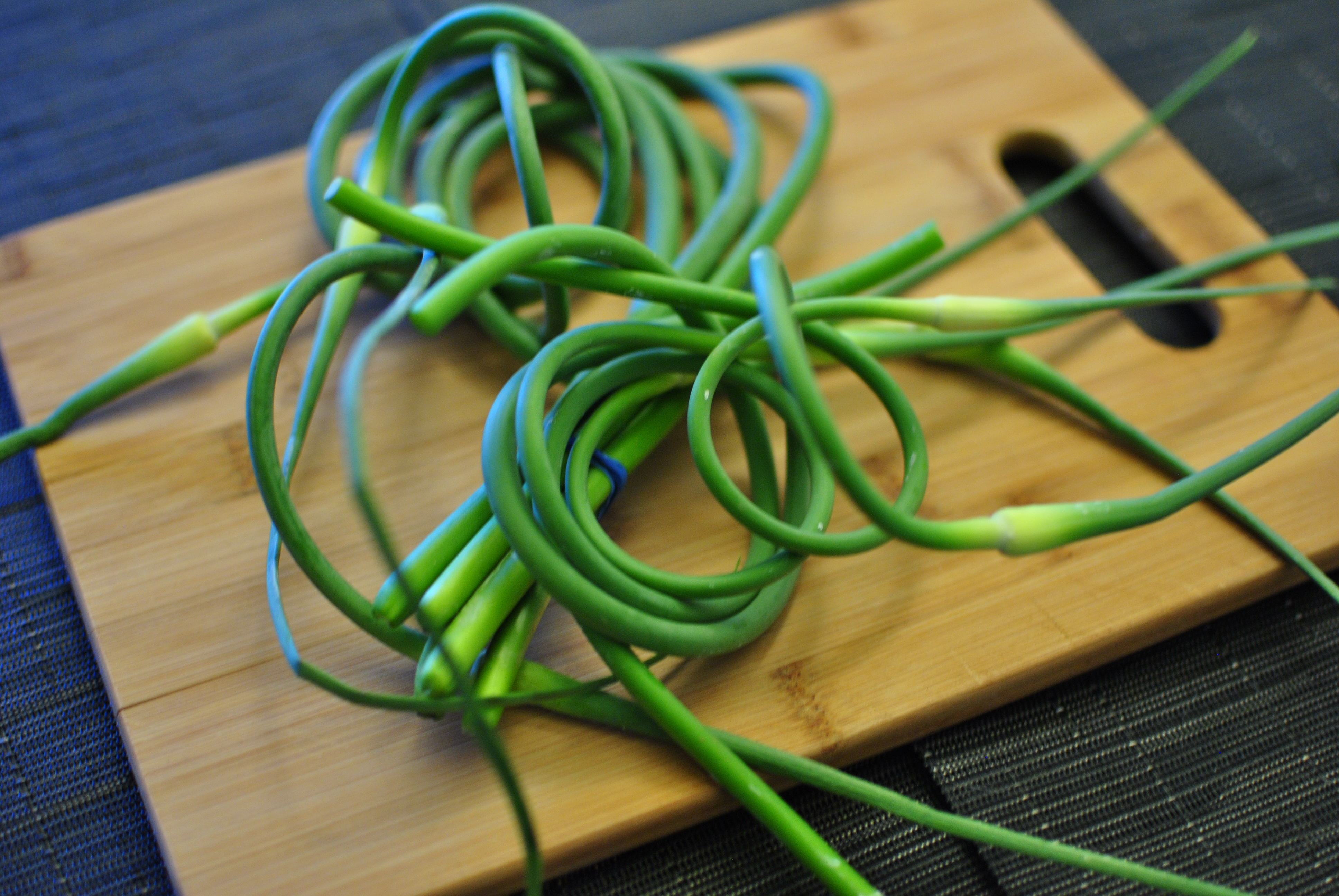
Garlic scapes

As I mentioned in my previous post, our bounty from week #1 of our CSA share included four garlic scapes. What are garlic scapes? Basically, they’re what grows out of a garlic bulb when you leave the bulbs unused for too long. Who knew those green plants sprouting out were edible? Not us!

Our CSA posts recipes for various vegetables, and I saw one for garlic scape pesto. I love pesto sauce so that seemed like the best use of the scapes. We didn’t have all the right ingredients on hand though but it wasn’t too hard to find a recipe that worked for us. I did a quick internet search and found this recipe from Dorie Greenspan. Dorie’s recipe required 10 scapes though, so I sent Josh to the 57th St. Greenmarket to pick up an extra bunch of scapes. I ended up with 9 in total and I figured, close enough!

This is what Dorie’s recipe calls for:

-10 garlic scapes, finely chopped
-1/3 to 1/2 cup finely grated Parmesan (to taste and texture)
-1/3 cup slivered almonds (you could toast them lightly, if you’d like)
-About 1/2 cup olive oil-
Sea salt

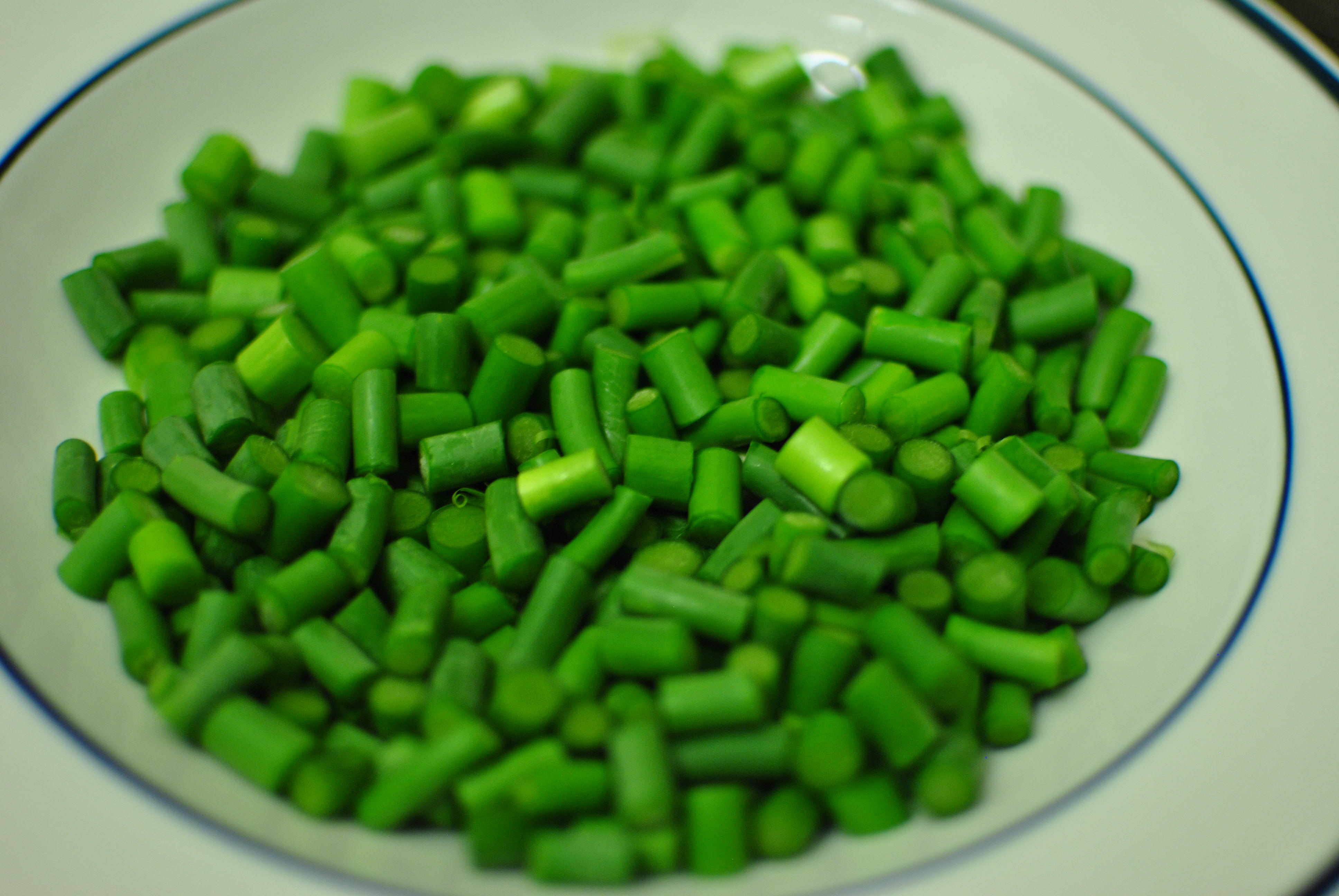
To prepare the scapes, I washed them and cut off the top flower bud part, then chopped the rest of the stalks into little pieces. It doesn’t have to be even since it’s all going into the food processor anyway.

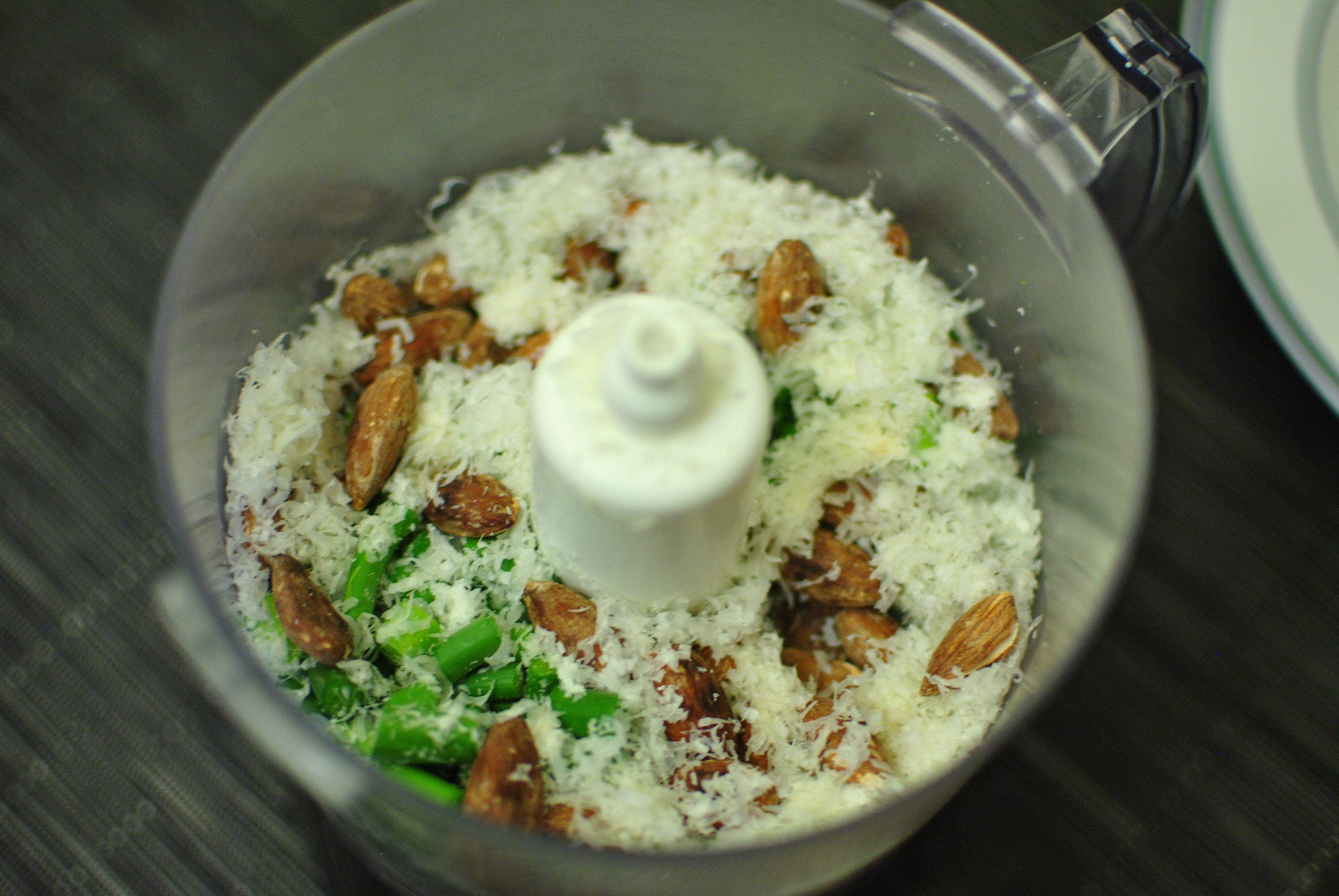
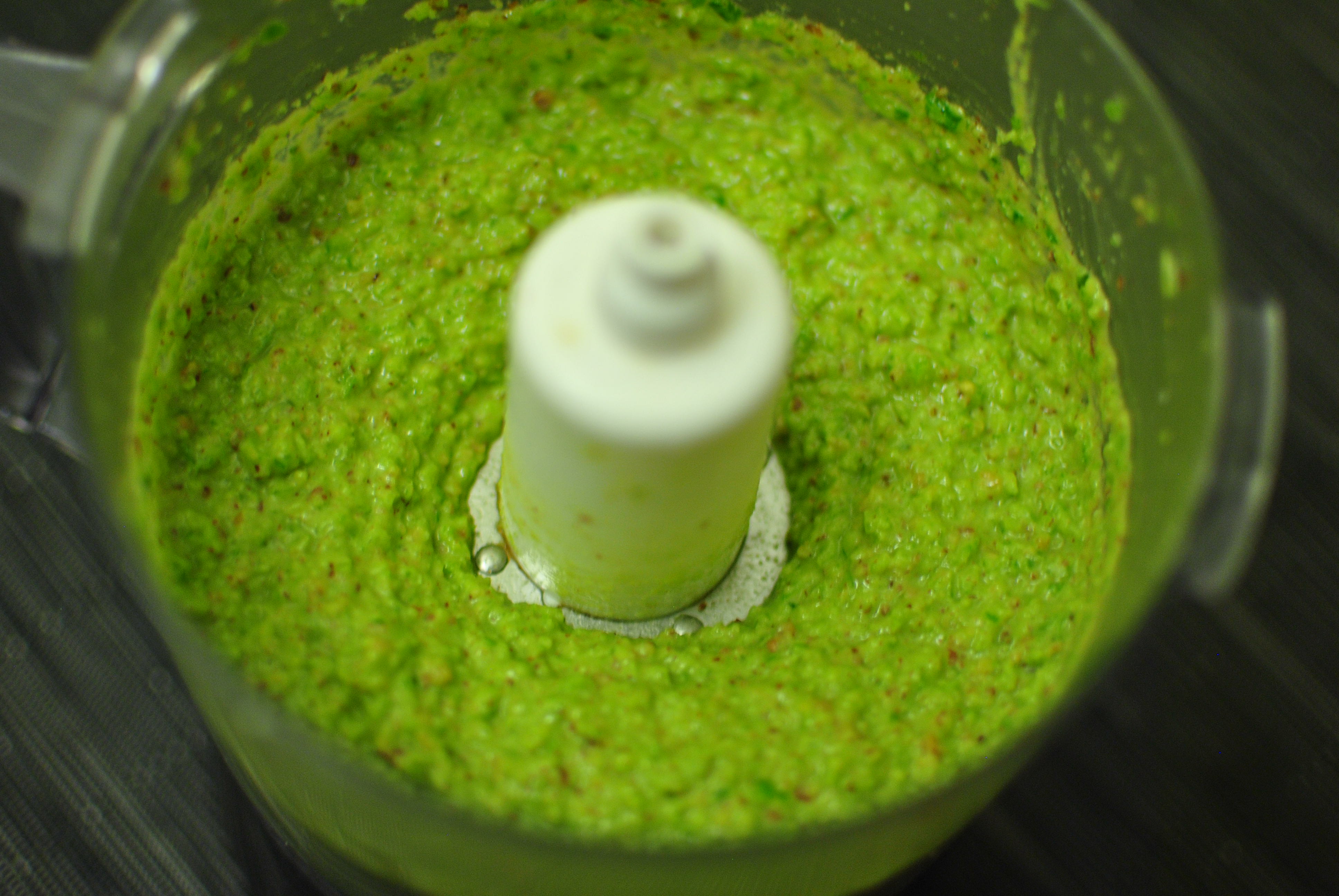
We only had whole almonds on hand, which I toasted, and I tossed everything into the food processor for a whirl.

When I tasted the pesto though, it was sharper than I expected it to be. It definitely packed a garlicky punch, but was also slightly spicy. The Greenmarket scapes were significantly larger than the CSA scapes, so perhaps the older and bigger the scape is, the stronger/sharper it gets in flavor? I ended up tossing in twice the amount of parmesan cheese and twice the amount of olive oil to try to mellow out the flavor more.

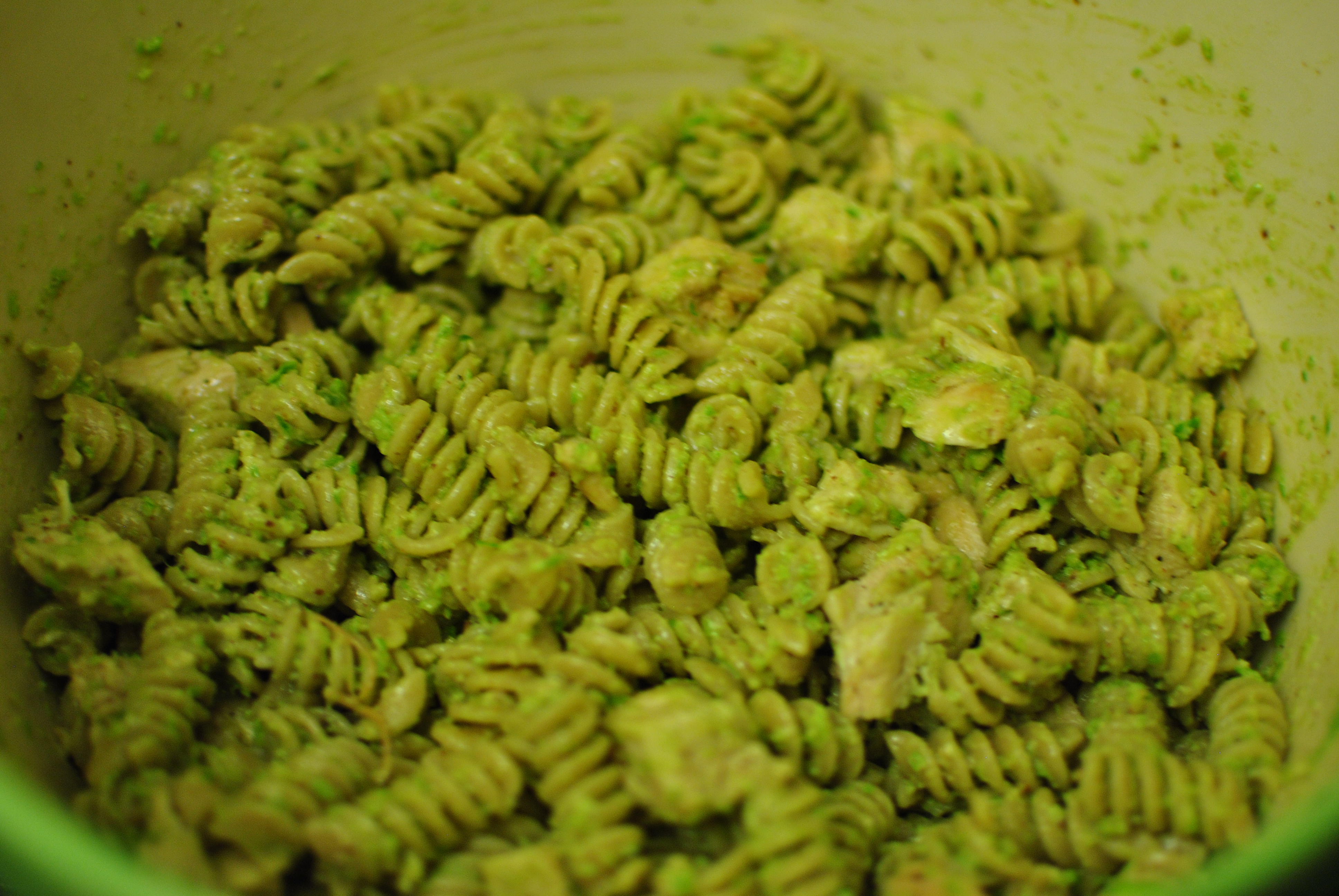
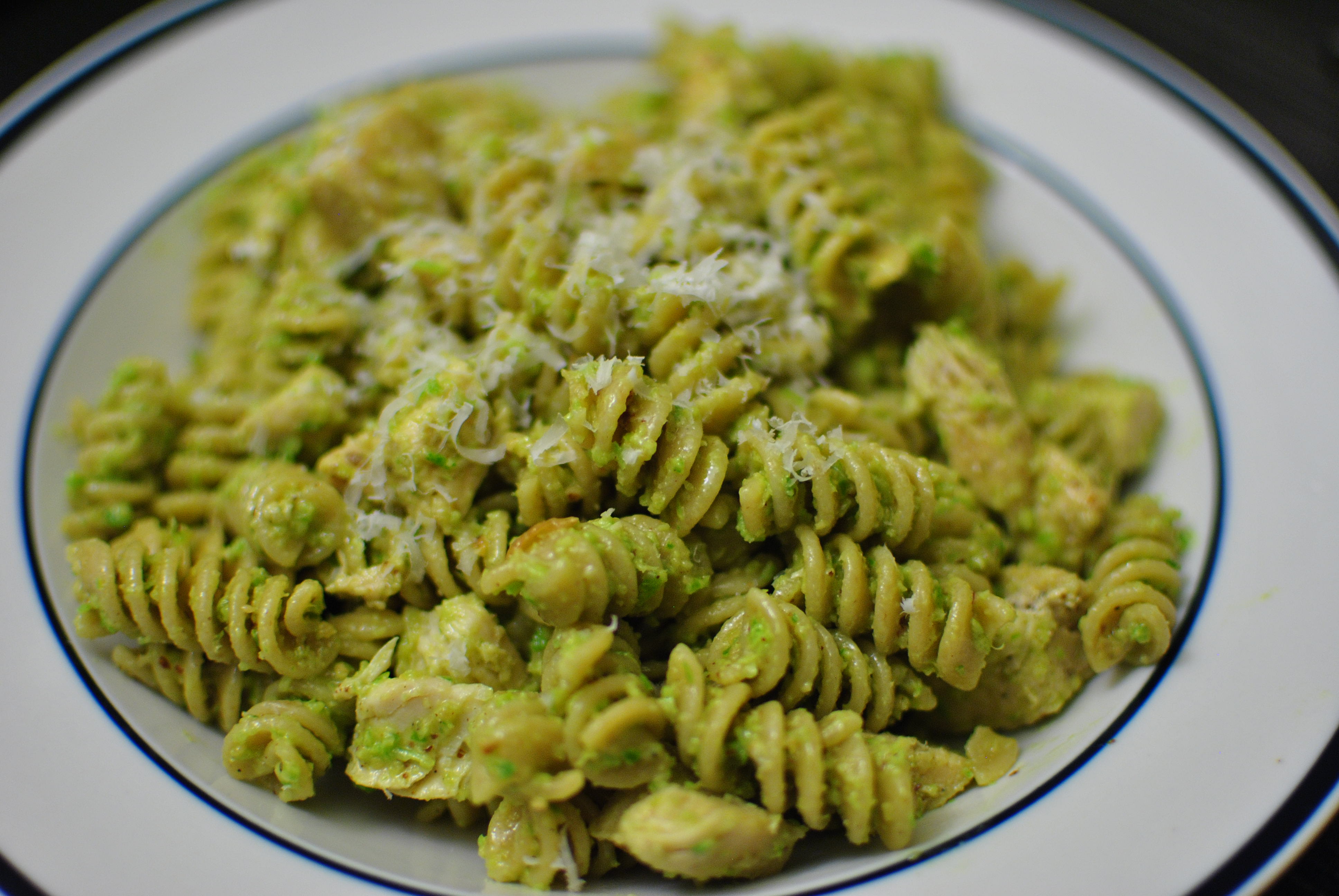
The extra cheese and oil did help, and the pesto came out as a thick, creamy paste. I tossed it with some whole wheat rotini pasta and some diced cooked chicken. The pesto was a bit too thick, so I added some pasta water to help loosen it up a bit. It’s a neat little trick I learned from watching Lidia’s Italy.  Make sure to season the dish with salt and pepper to taste.

Lastly, I topped the pasta with even more grated parmesan. There’s never such a thing as too much parmesan!

Overall we both liked the garlic scape pesto but I found the flavor to be a bit too nutty. I would reduce the amount of almonds next time, but that might just be a personal taste. Josh thought the garlic flavor was slightly too sharp, so another alternative would be to sautee the scapes for a bit to mellow them out. But making pesto is super easy, and we had a delicious and healthful meal on the table in less than 30 minutes. The scape pesto worked brilliantly with a nice cold bottle of pinot grigio, and Josh and I were both pretty happy campers.

Venetian Spaghetti with Sardines

Sunday, April 11th, 2010 by virginia

I saw this recipe on Serious Eats and knew that I would have to try it, since it was described as tasting like clam chowder on pasta. I love clam chowder, and I love pasta. Putting the two together just seemed simply genius to me. I ended up trying out the recipe for Lent and it worked out pretty well, but it wasn’t quite like clam chowder. The sardines definitely have a fishier flavor, which I didn’t mind, but when I reheated some in the microwave at work I was very aware of how fishy it smelled. Nevertheless, this is a pretty quick and easy pasta to make, and most of the ingredients you probably already have on hand. It’s a rich and comforting dish, and I would definitely make it again.

Ingredients:

-2 tablespoons unsalted butter
-2 tablespoons extra-virgin olive oil
-2 medium onions, finely chopped
-One 4-ounce can olive-oil-packed sardines
-1 cup whole milk
-Salt and freshly ground pepper
-1 pound spaghetti

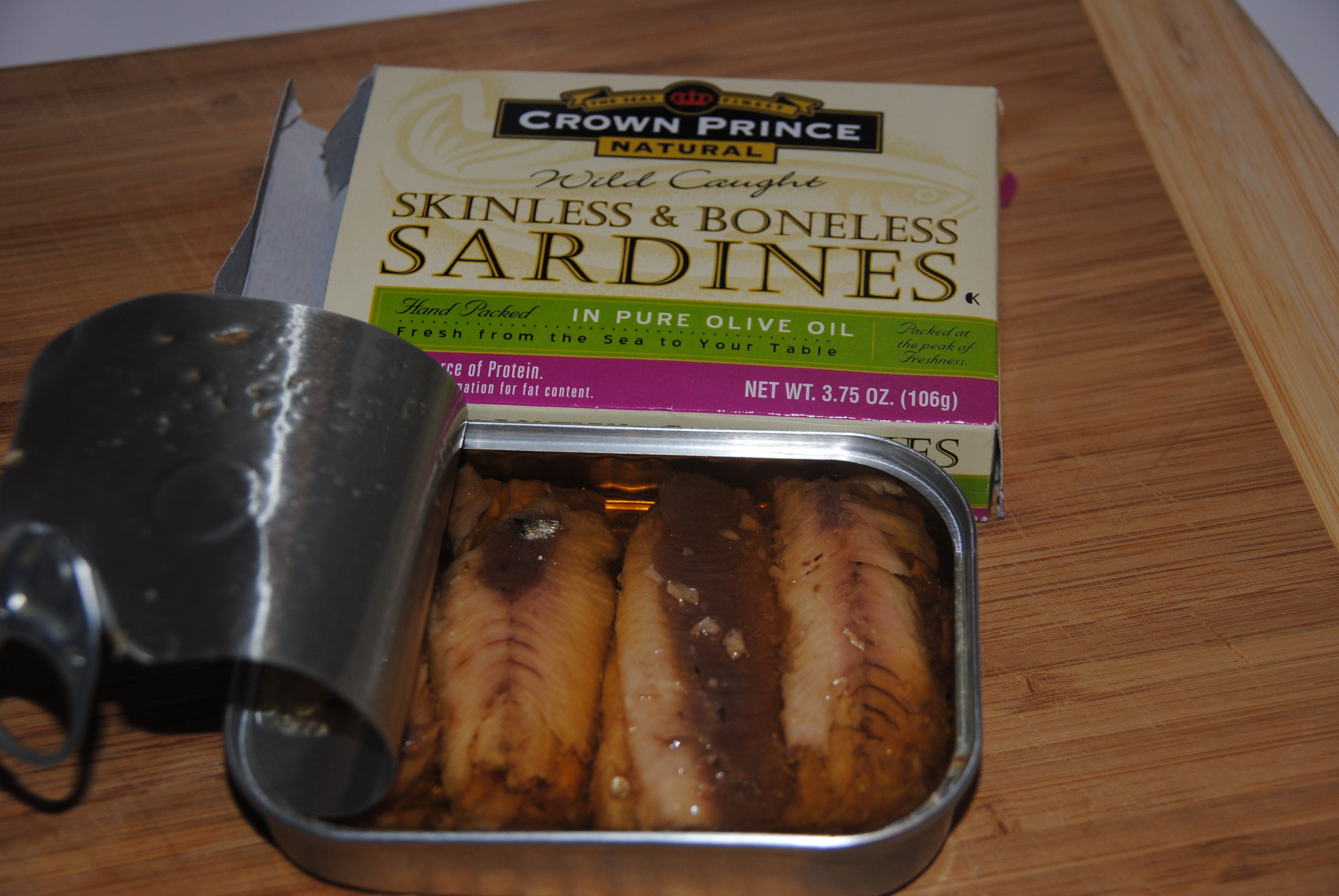
The directions couldn’t be easier. First, put a pot of water on to boil for the pasta. De-bone the sardines and chop them up into small pieces. I used sardines that were already skinned and boned, which saved me an extra step.

Skinless and boneless sardines

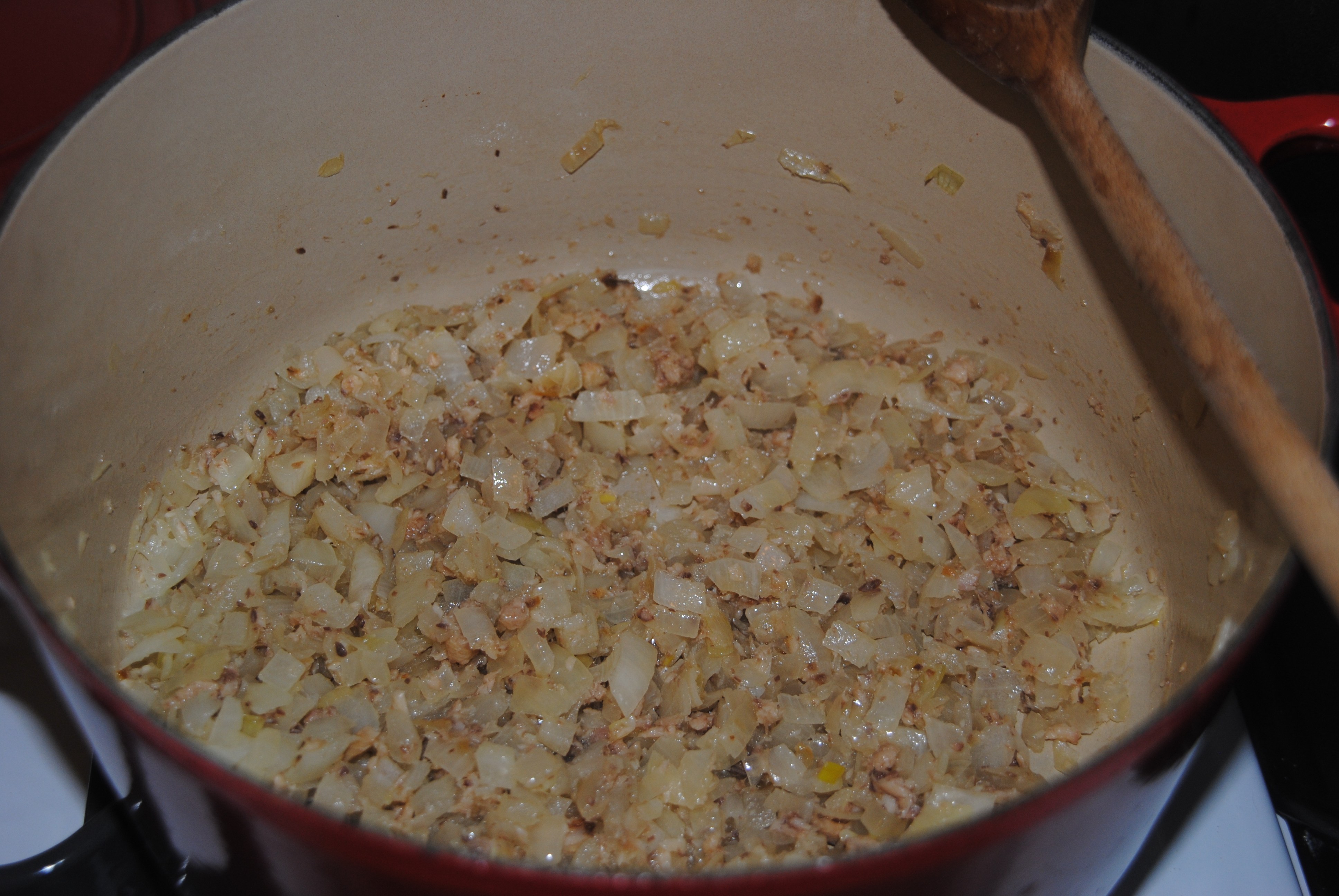
Then cook the onions in the butter and olive oil until they start to get brown. Chop up the sardines and throw it into the pot with the onions, then add a bit of water and mix it all together.

Sauteed onions and chopped sardines

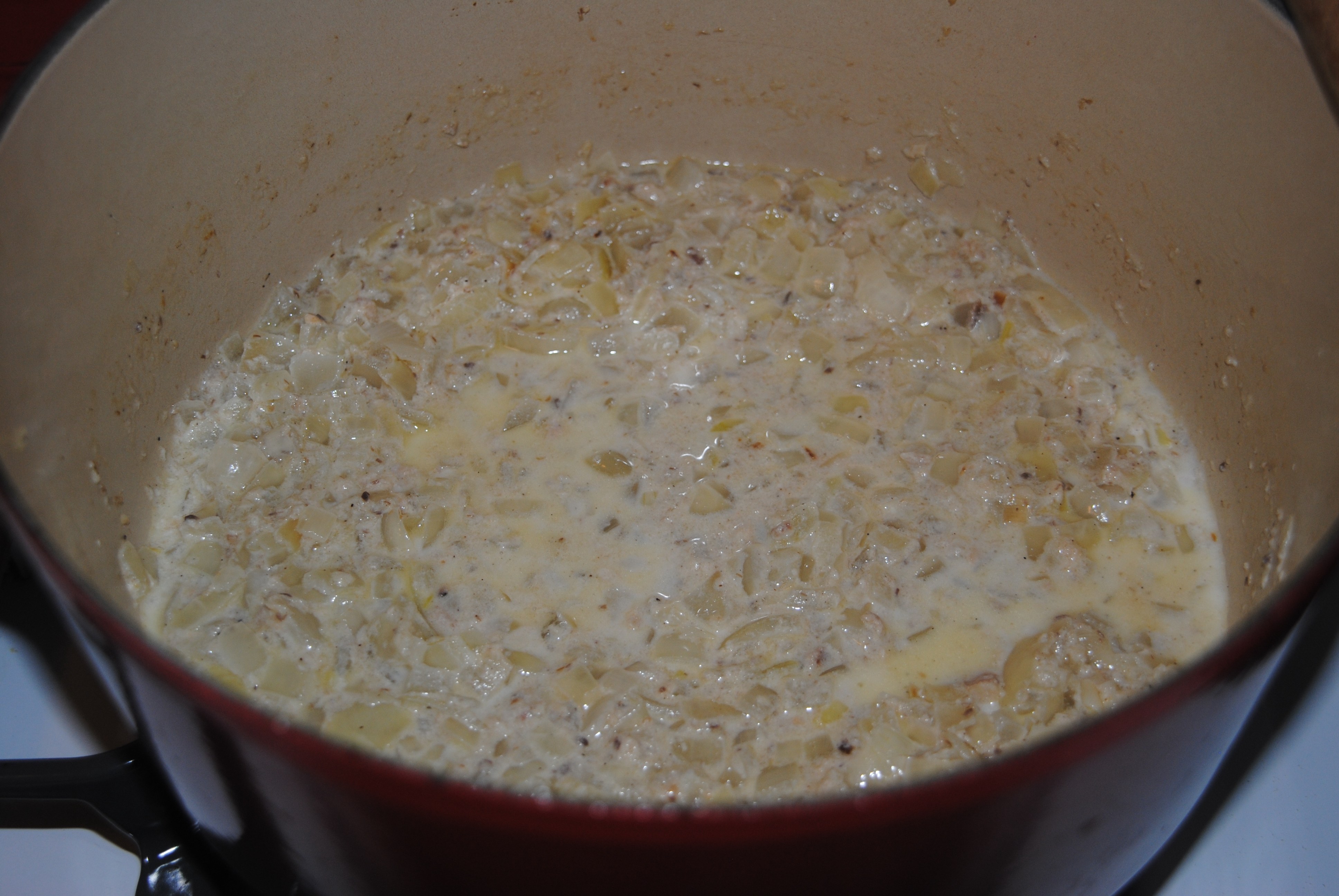
Add in the cup of milk and bring it to a boil, stirring often so that the sardines melt into the sauce. Keep it simmering for about 10 minutes, until it thickens.

Creamy onion and sardine sauce (seriously, it's good)

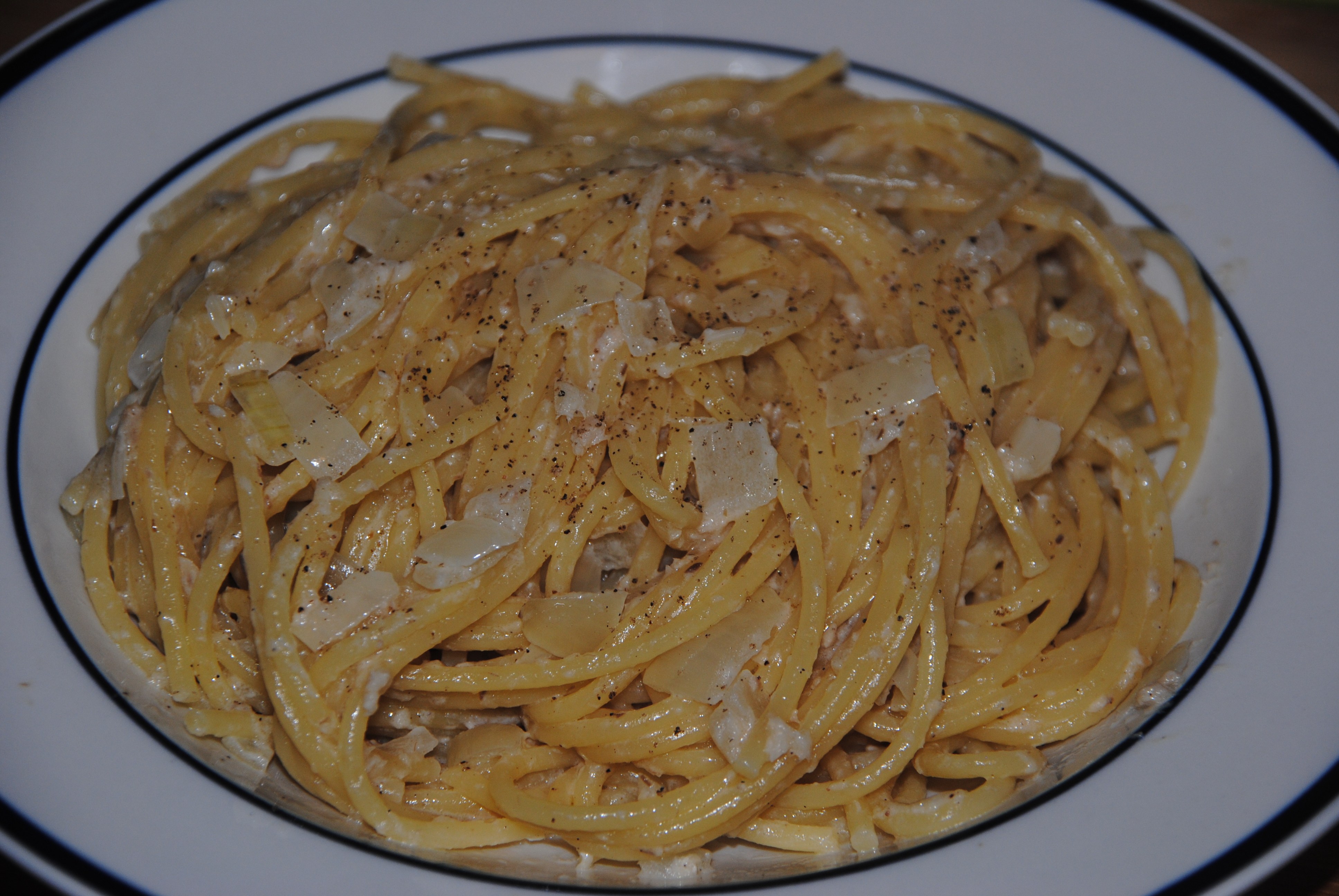
Meanwhile, cook the pasta, and when it’s ready, toss it into the sauce and mix well until all the strands are coated. If it’s too thick, add some more milk or pasta water to loosen it up. Season with salt and pepper. I finished it with a bit of olive oil and a good sprinkling of pepper on top.

Venetian spaghetti with sardines

For the full recipe, please click here!

The Best French Onion Soup Recipe Ever

Monday, March 15th, 2010 by virginia

If you love french onion soup like I do, you have to try this recipe. It’s seriously the best french onion soup that I’ve ever eaten, hands down. And aside from some stirring that you have to do in the middle, this recipe is super easy. I’m actually going to list ingredients and step by step directions because I love it so much, and I want you guys to get it right as well. I learned it from watching an episode of “America’s Test Kitchen”, which is one of my favorite cooking shows on PBS. All it takes is a little time and a little love, and you’ll have a huge pot of amazingly delicious french onion soup.

Best French Onion Soup Recipe
Adapted from America’s Test Kitchen

Ingredients:

-4 lbs yellow onions
-3 tablespoons butter
-1/2 cup sherry
-4 cups chicken broth
-2 cups beef broth
-1 bay leaf
-sprig of thyme
-water
-salt
-pepper
-toasted baguette slices
-grated or thinly sliced cheese (any combination of gruyere, swiss, jarlsbeg, and parmesan)

Directions:

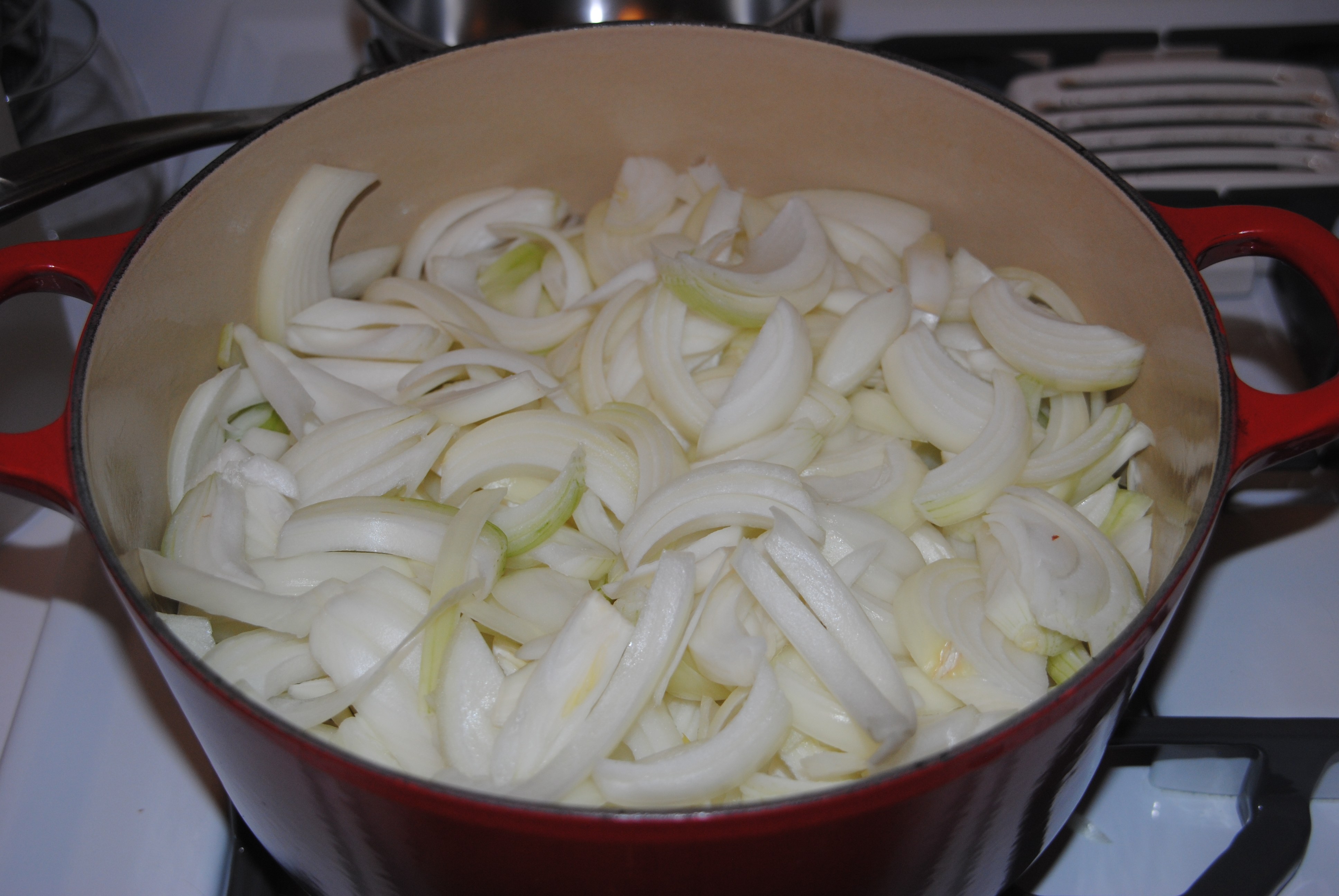
1. Preheat your oven to 400 degrees. Spray the inside of a dutch oven with nonstick cooking spray, or pour some oil into the bottom and spread it all around with a paper towel. Cut the butter into smaller pieces and scatter it around the bottom of the dutch oven. Cut the onions in half through the root end, and slice into 1/4 inch thick slices from pole to pole. Put the slices of onion into the dutch oven and sprinkle 1 teaspoon of salt over the top. Cover the dutch oven and place it into the oven for 1 hour.

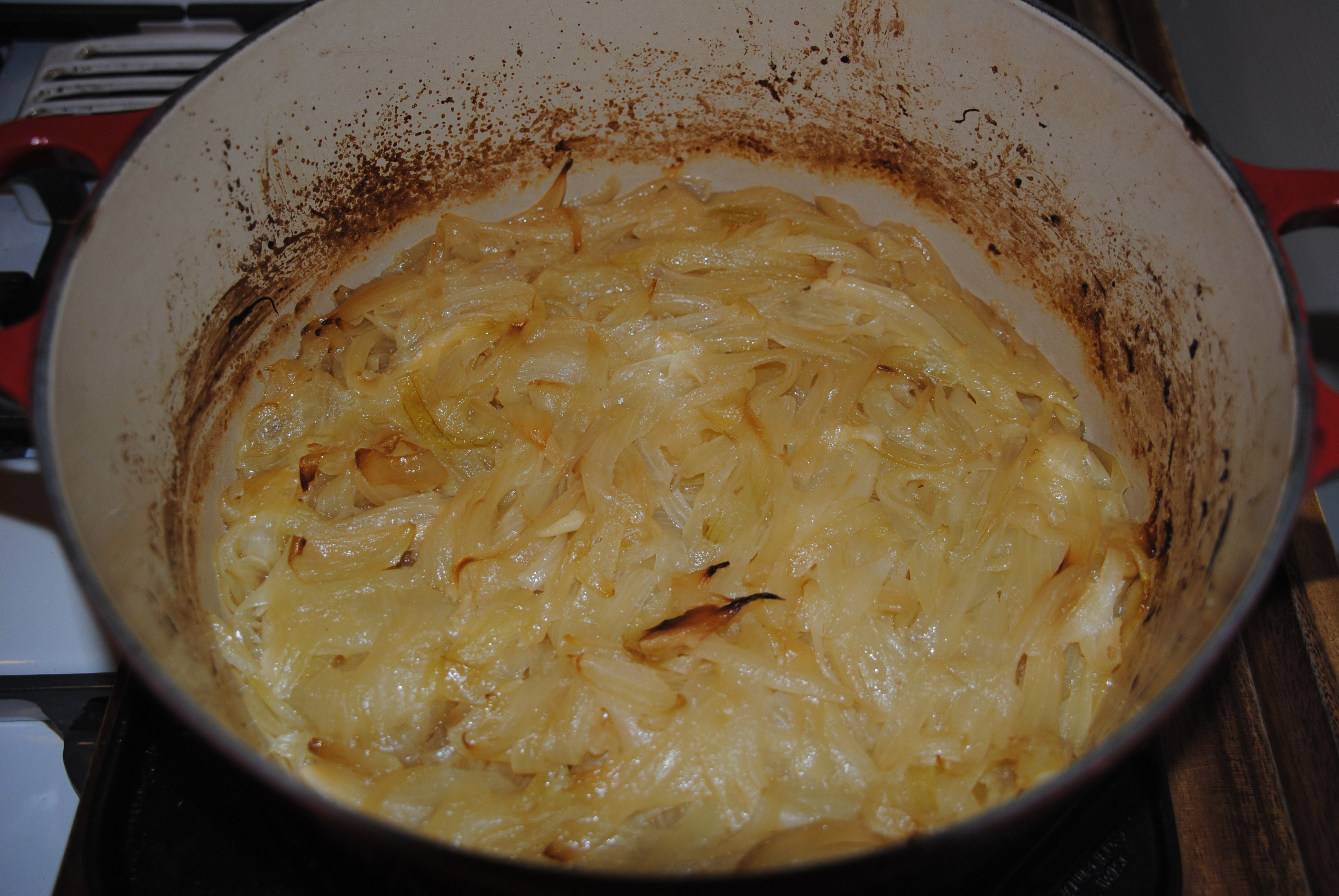
Four pounds of sliced yellow onions in a dutch oven with three tablespoons of butter

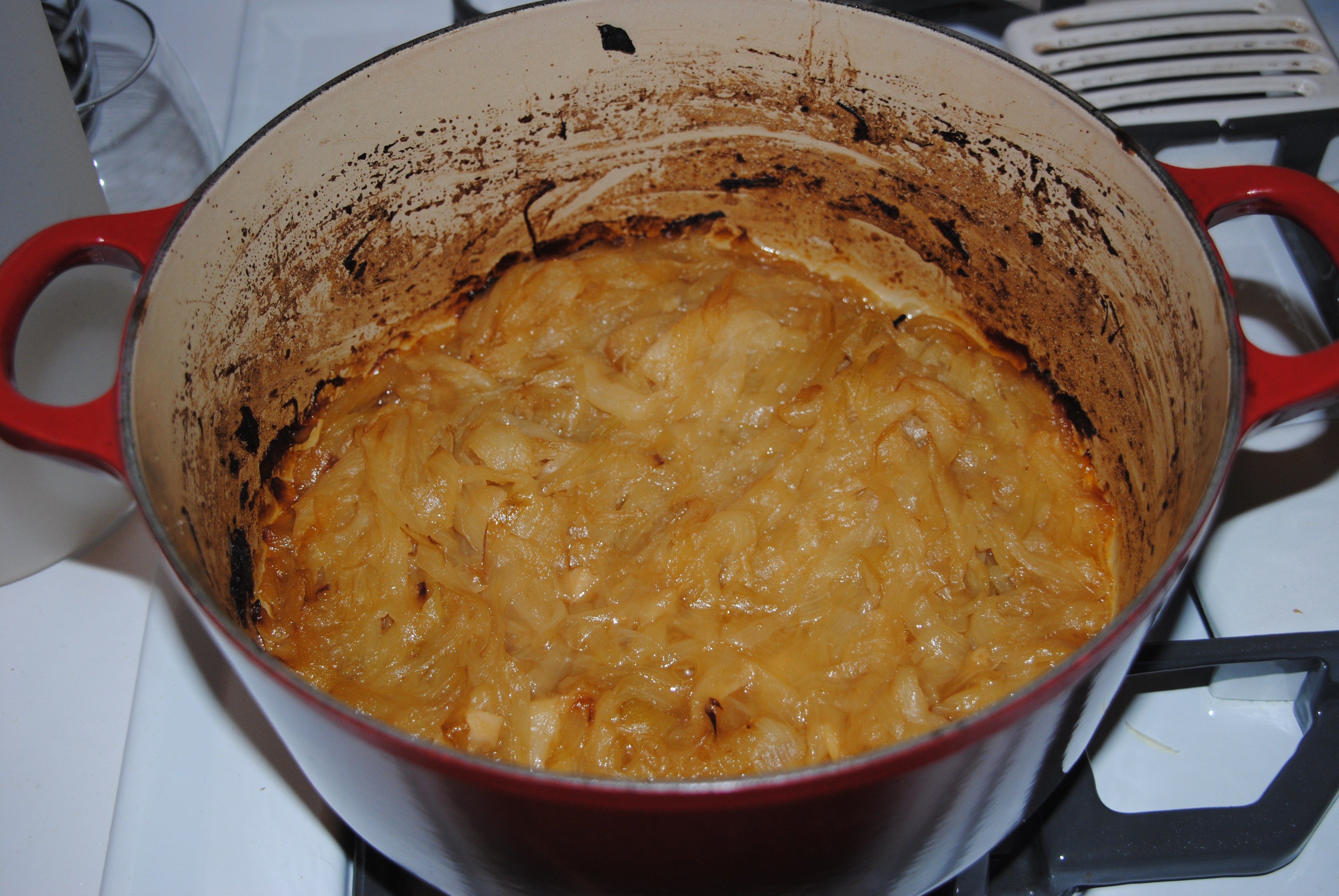
2. Remove the dutch oven after an hour and take off the cover (use oven mitts!), stirring the onions and scraping down the sides. The onions should just be starting to brown. Replace the cover on the dutch oven but leave it slightly ajar cook for another hour. Stir and scrape down the sides again, then put it back in the oven with the cover still ajar for another 45 minutes.

Onions after one hour in the oven

Onions after two hours and 45 minutes in the oven

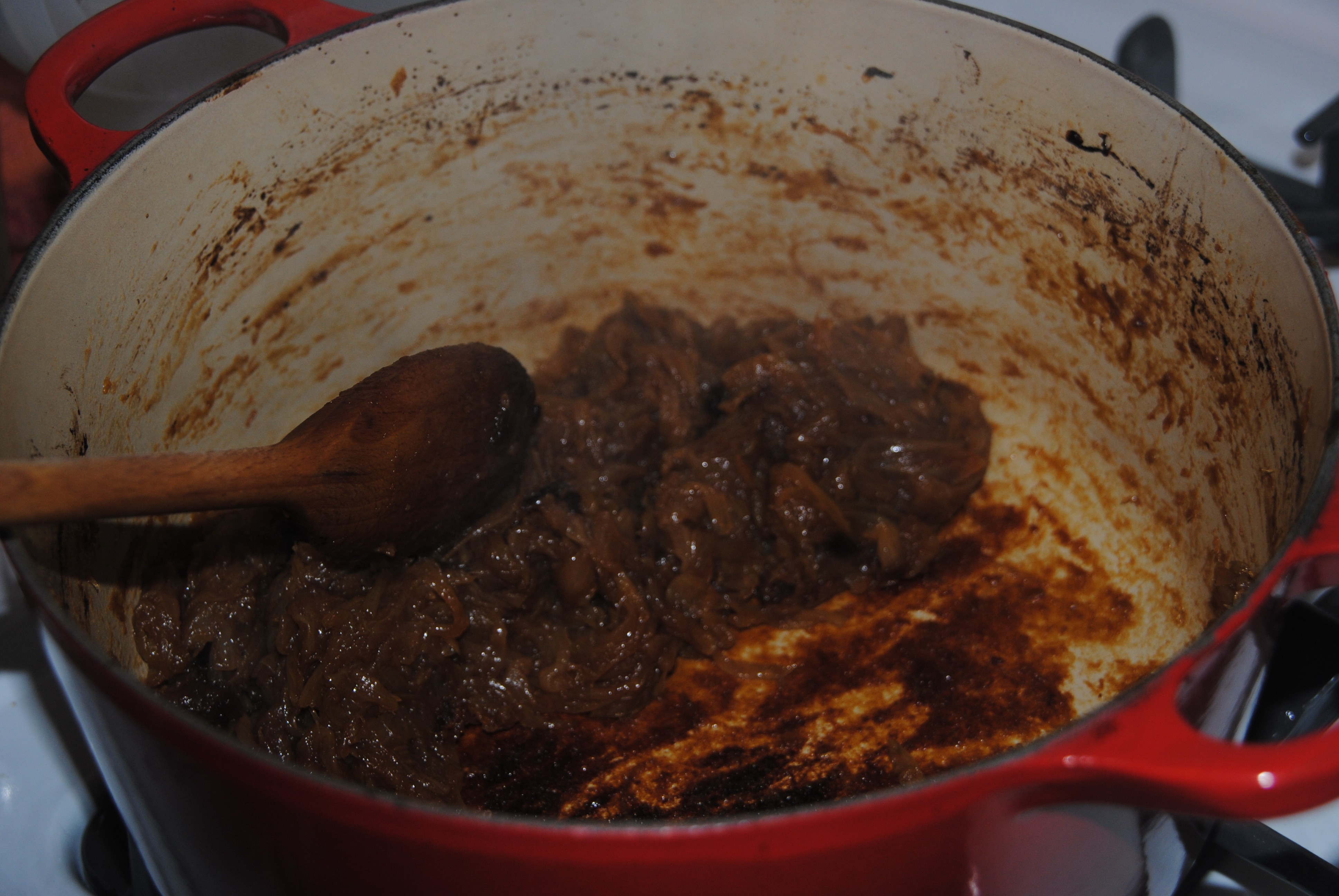
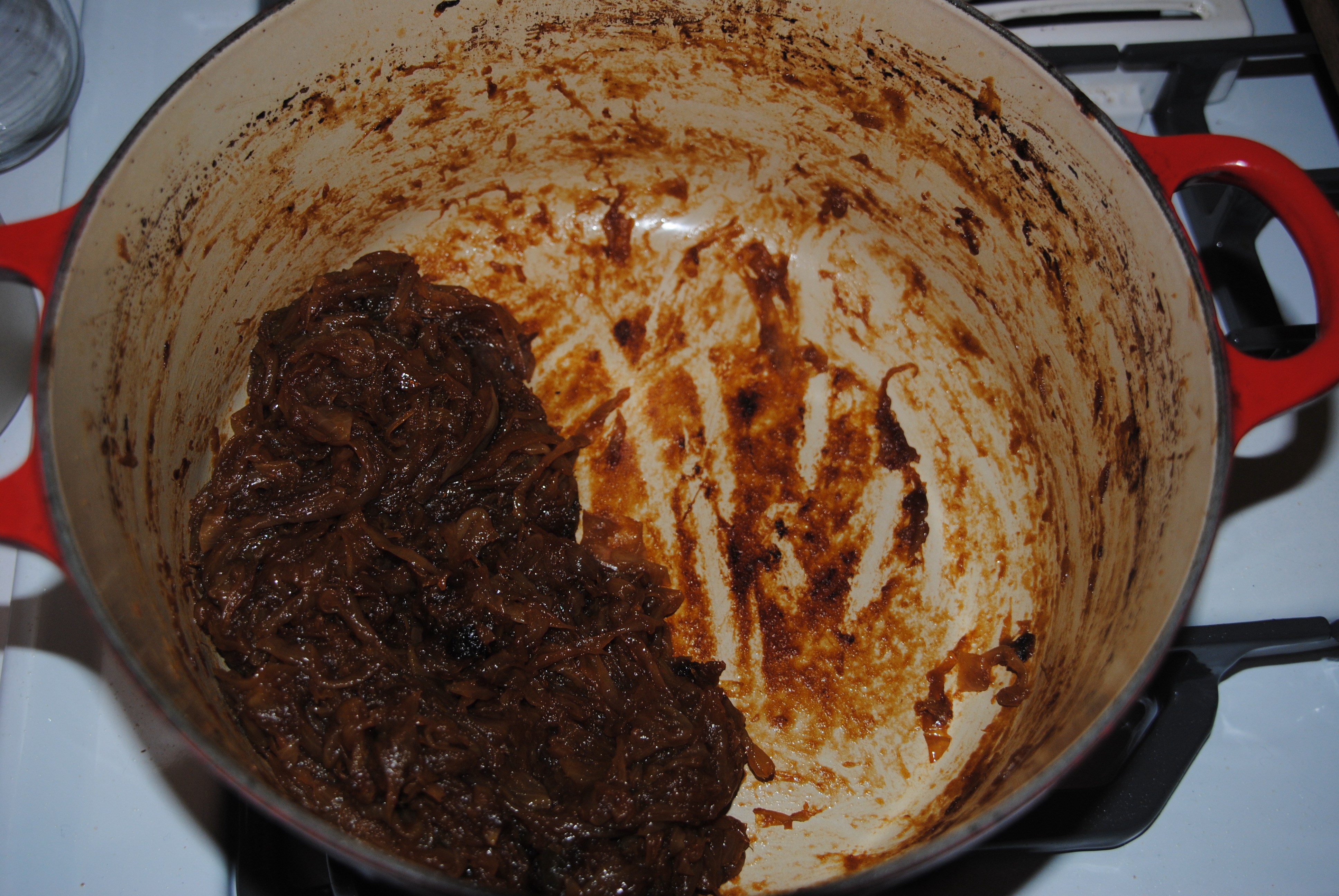
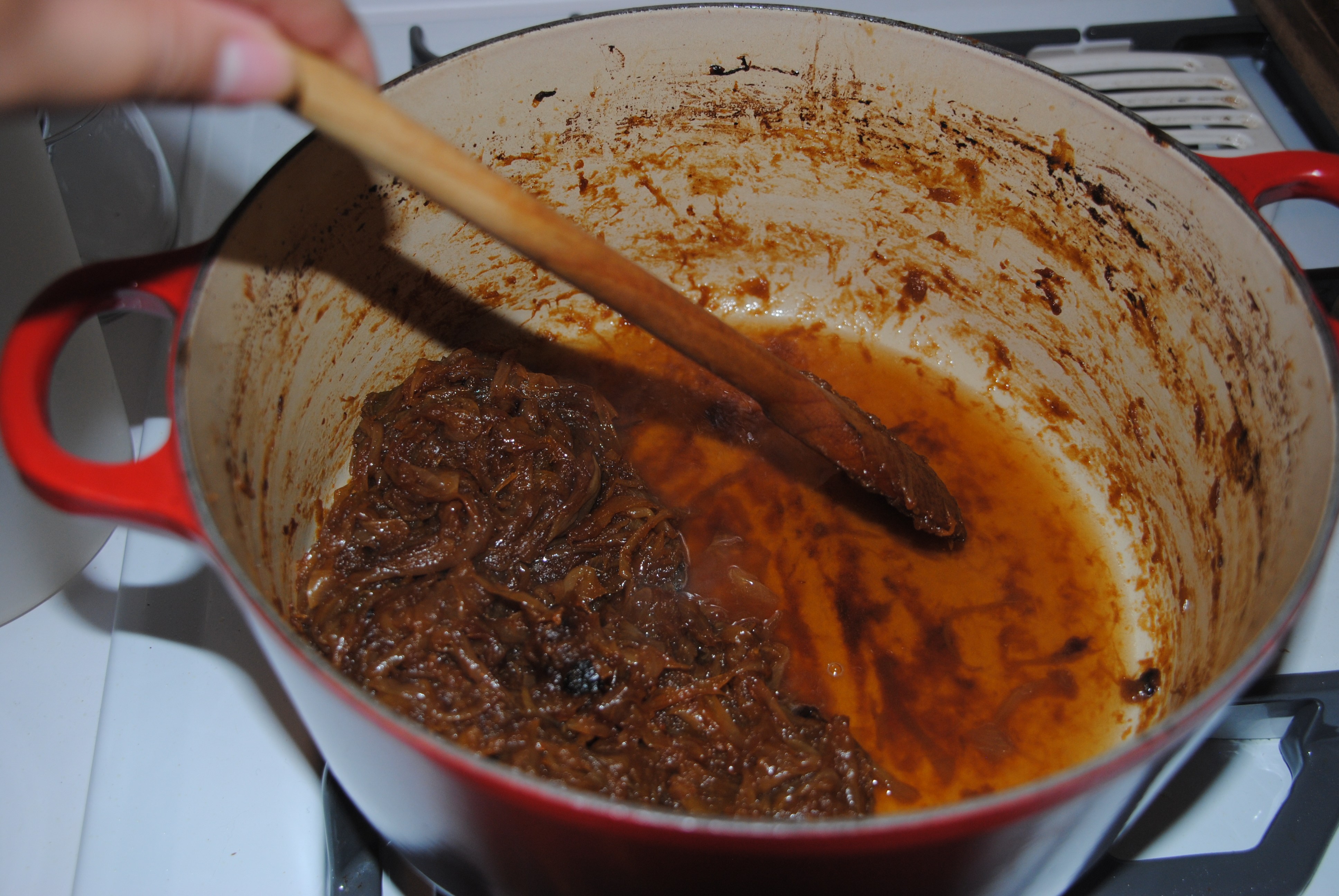
3. Remove the pot and place it on the stove over a medium high heat. Stir frequently and scrape down the sides. After 15 minutes, a dark crust should form at the bottom of the dutch oven. Don’t be alarmed! This is fond, and it’s full of flavor. It can get to be a very dark brown, just watch that it doesn’t get too black or burned. Turn down the heat if necessary. After the fond is formed, pour in 1/4 cup of water and scrape the fond up from the bottom, stirring it into the onions. After the water has evaporated, cook the onions for another 6-8 minutes until another fond crust forms at the bottom of the dutch oven. Add another 1/4 cup of water and scrape it up from the bottom, mixing it into the onions. Repeat this process 4 times in total. The onions will be very brown and soft at this point – that’s a good sign!

Developing dark fond at the bottom of the pot

Adding water and scraping up the fond from the bottom

4. After the fourth scraping, let the fond develop one more time, then deglaze with 1/2 cup of sherry. Scrape up all the brown bits and mix it with the onions. At this point the onions should be a very dark, deep brown color.

Adding sherry and deglazing the bottom of the pot one more time

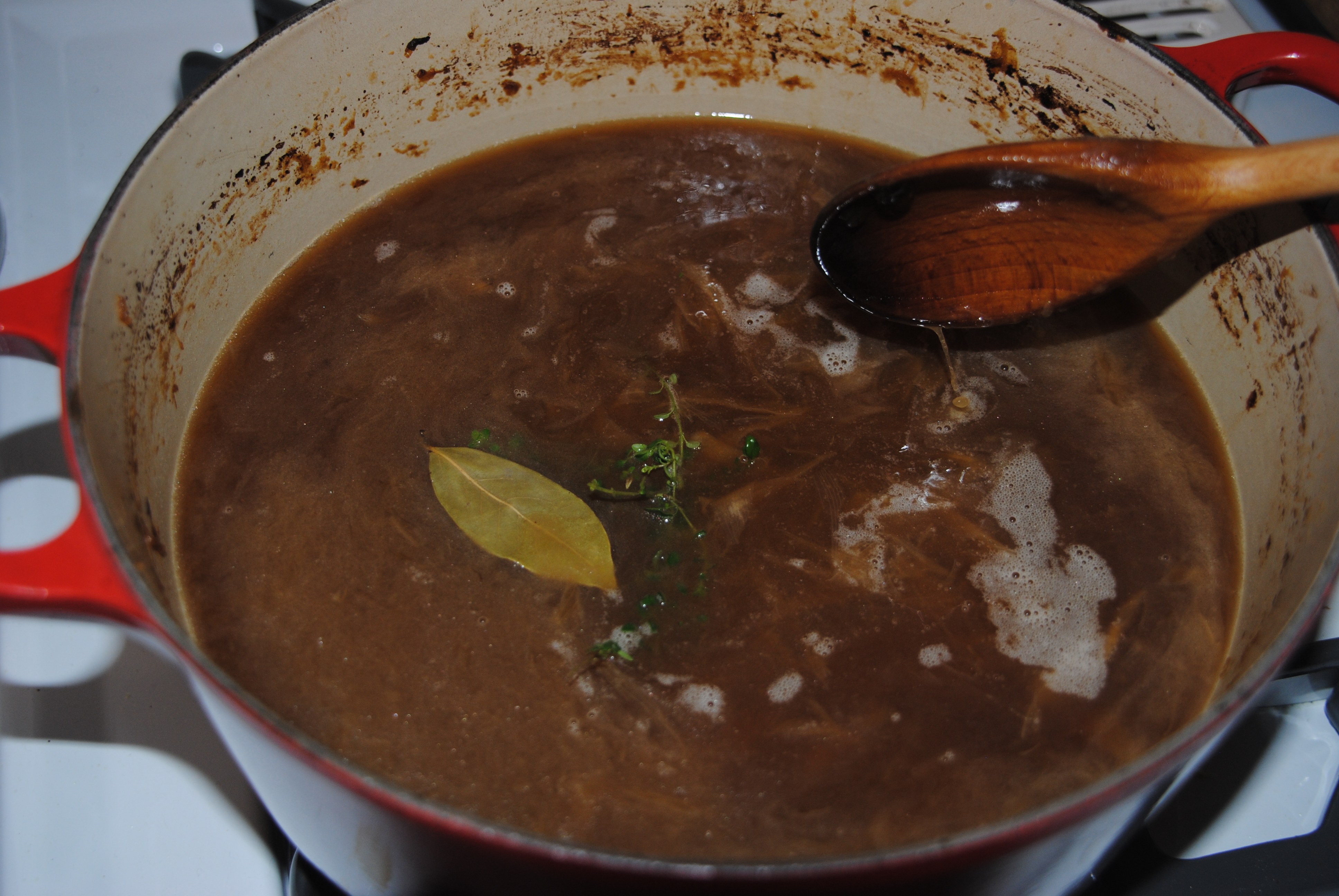
5. Pour in 2 cups of water and both the chicken and beef broths. Add in the bay leaf and a sprig of thyme. Stir to combine, then turn the heat up to high. When the soup starts to boil, cover the dutch oven and turn the heat to low. Simmer for 30 minutes. Taste and adjust for seasoning, adding salt and pepper as needed.

Adding in chicken broth, beef broth, and water, and simmering with a bay leaf and thyme

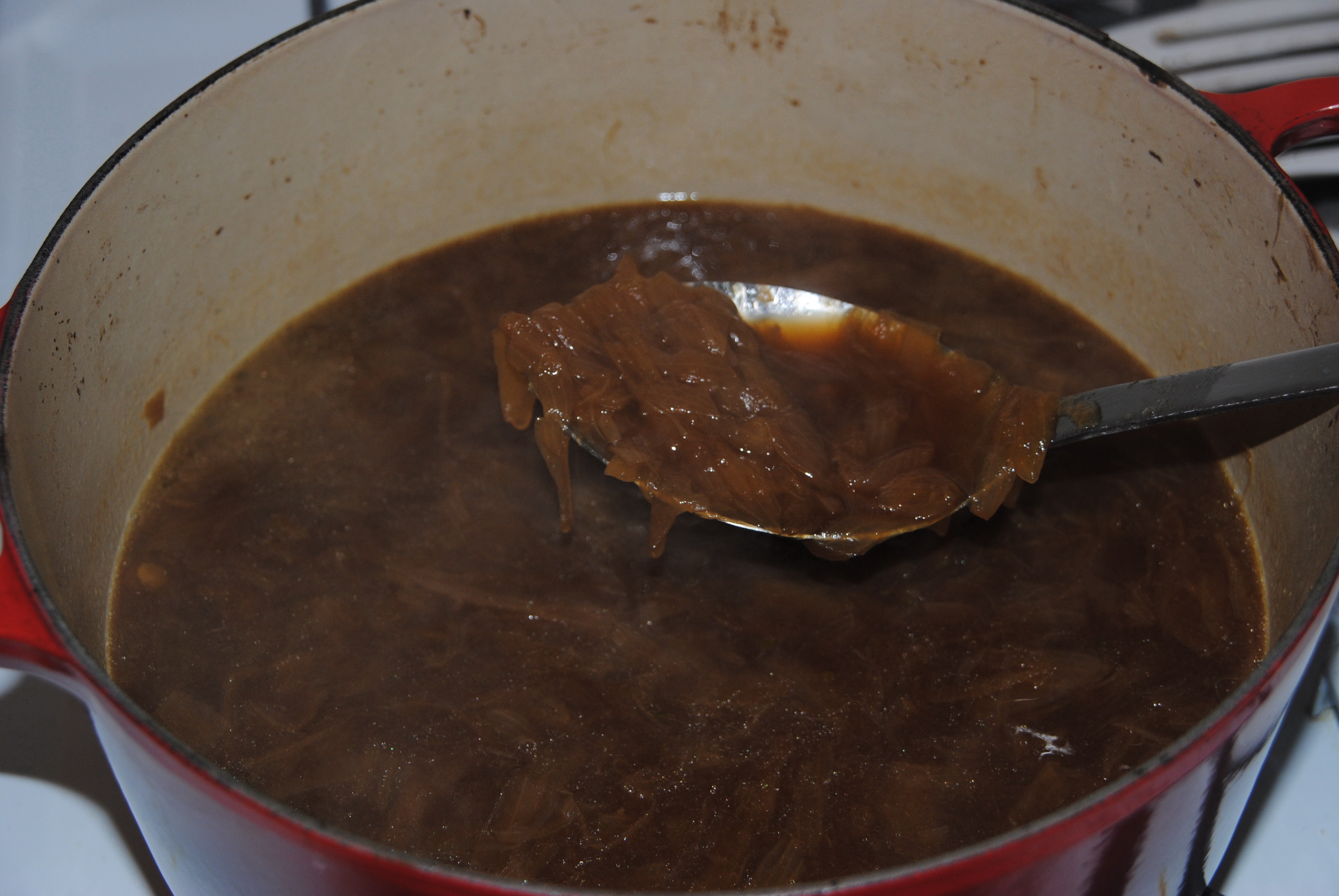
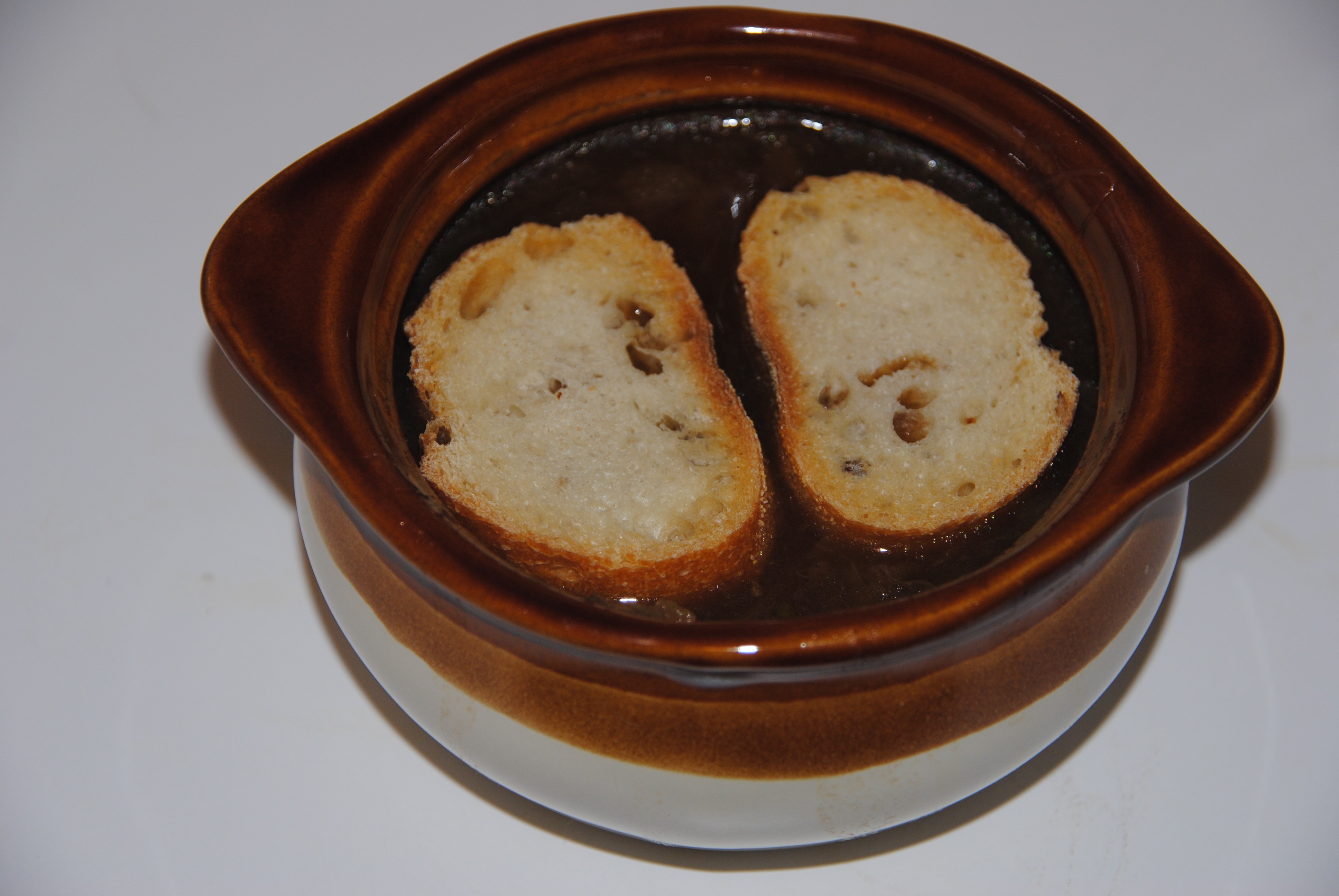
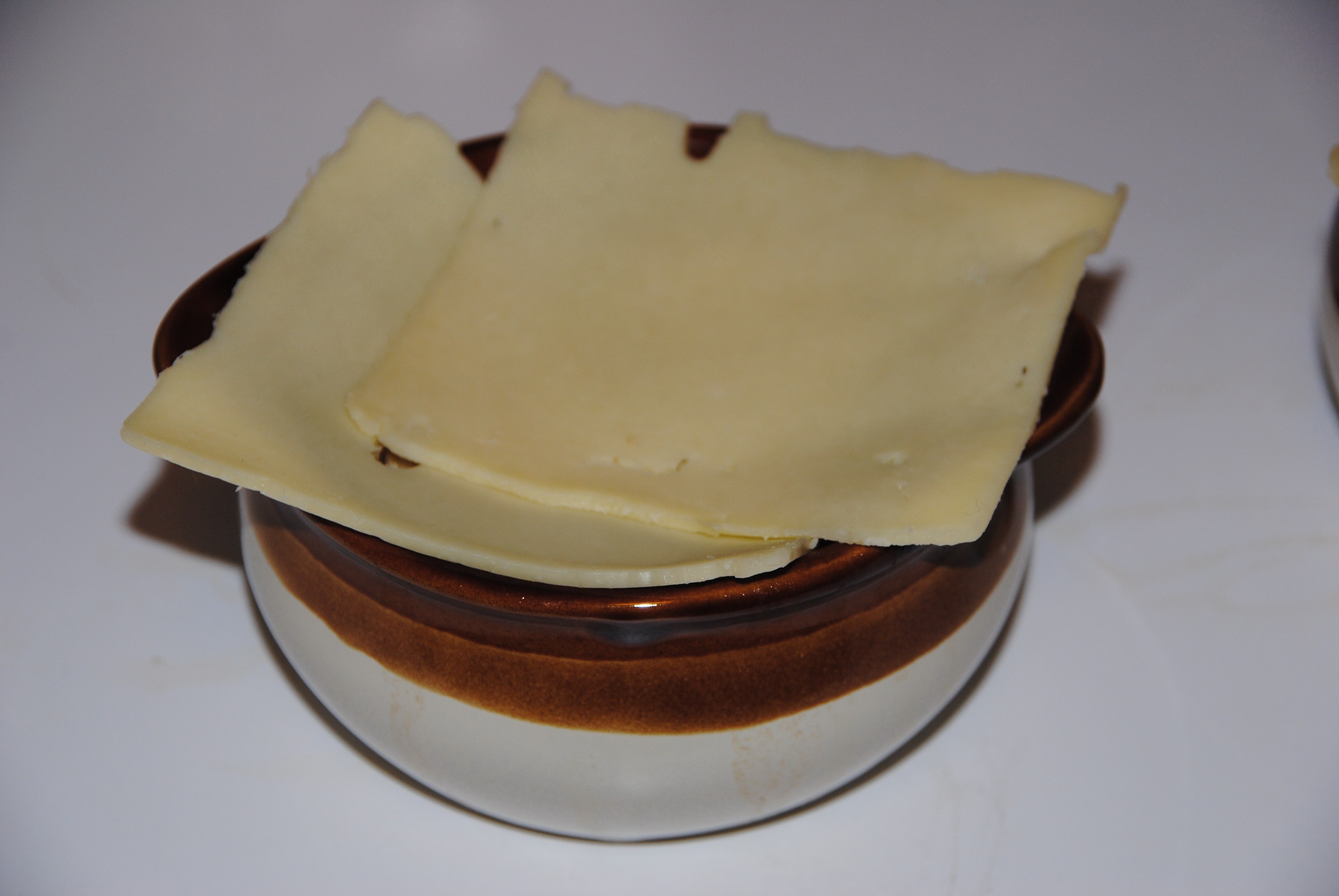
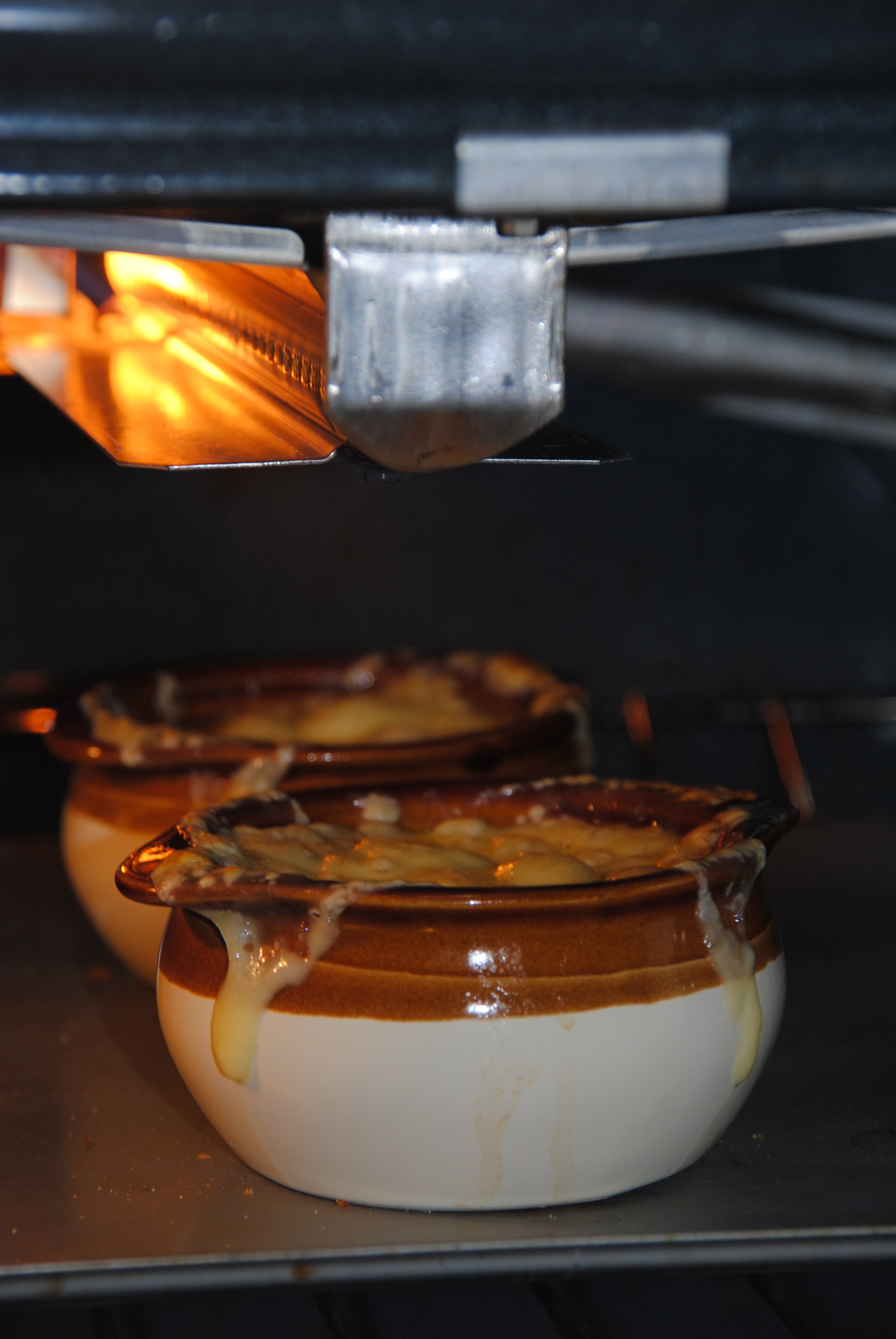
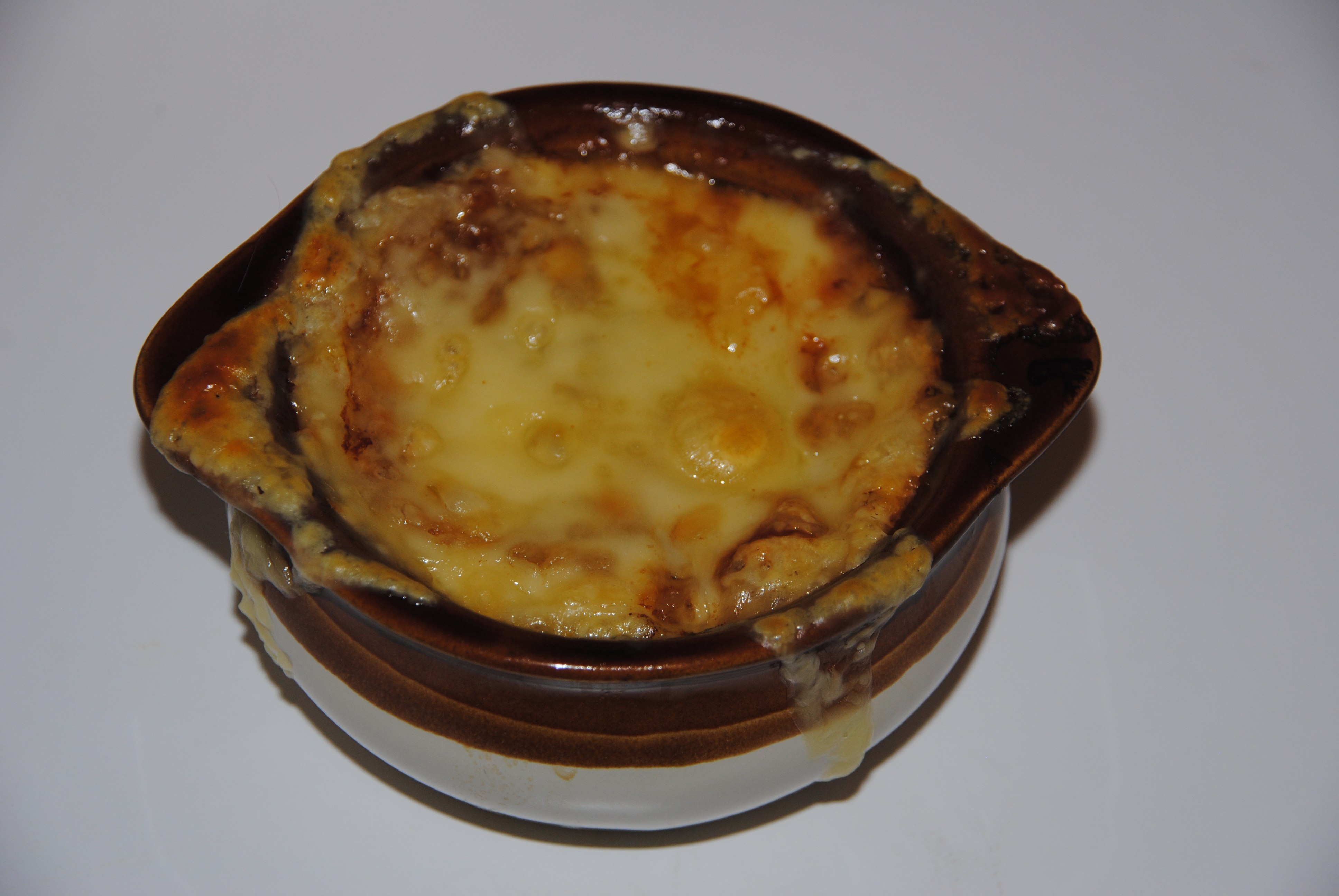
6. To prepare the soup for serving, toast slices of baguette. Ladle some hot soup into an oven safe bowl and cover the top of the soup with the toasted baguette. Top the baguette slices with cheese. Gruyere is the classic preference but I like to use a combination of jarlsberg and parmesan. Place the bowls of soup on a cookie sheet and side it under the broiler. Watch it very carefully as the cheese bubbles and browns very quickly.

After the soup is done simmering, ladle some into oven safe bowls

Top the soup with toasted baguette slices

Slices of jarlsberg go on top

Bubbling and browning cheese under the broiler

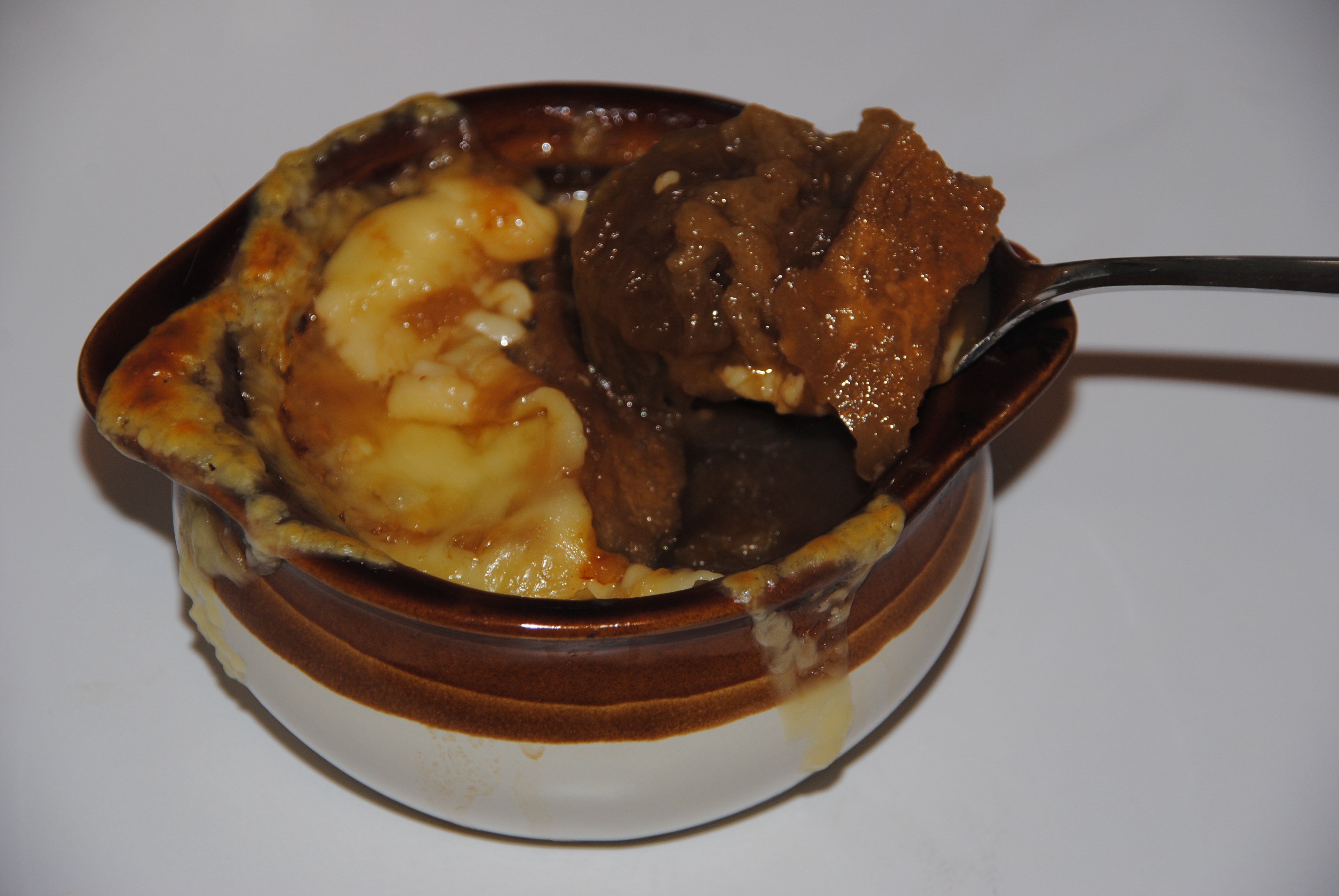
7. Remove the bowls from the oven very carefully and place on plates to serve. The bowls are super hot so be careful! Let it cool down a bit but be sure to eat it while it’s hot and the cheese is melted and stringy.

Homemade french onion soup hot and ready to eat

Every time I eat this soup, I still marvel about just how tasty it is. The broth is rich and deep, and the onion flavor really shines through. It’s better than any french onion soup that I’ve had at restaurants, and it’s really easy to make, I promise! Please try this recipe, and let me know how it turns out!

Bon appetit!

Pasta with Pink Vodka Sauce and Chicken

Thursday, February 4th, 2010 by virginia

As I’ve mentioned before, when Josh is away for work, I tend to get lazy and end up eating leftovers or slices of pizza from our failed pizza quest that we have stashed in our freezer. I don’t like to eat by myself so when I’m alone, I don’t really think too much about what I’m eating. One night, however, after a particularly long stretch of business trips for him, I couldn’t stand eating any more freezer burned pizza so I rooted around our fridge and pantry to see what ingredients we had on hand. I finally settled on making pasta with pink vodka sauce and chicken. It’s quick and easy to make, tasty, and one of my favorite comfort foods.

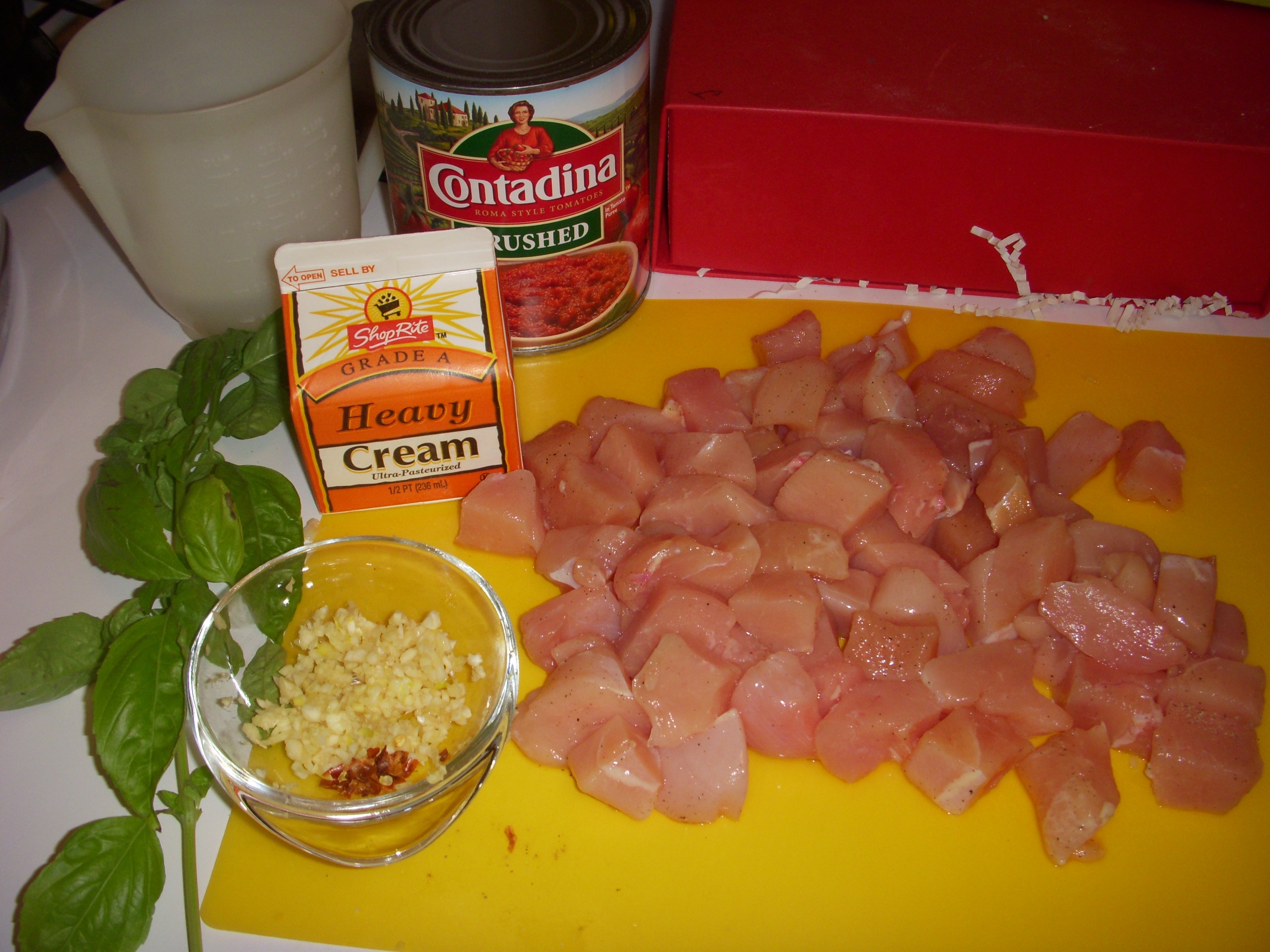
As with most of my cooking, I don’t really follow any particular recipe to the letter. To start, I prepped my ingredients by mincing a few cloves of garlic, washing off a stalk of fresh basil leaves from my surprisingly still thriving basil plant, and cubing up two boneless chicken breasts into bite size pieces. That’s basically all the grunt work that you need to do for this dish. Also, make sure you put a pot of water on to boil right away, so that you can put the pasta in just before the sauce is finished and your boiling water will be waiting for you, instead of the other way around.

All the sauce ingredients prepped and ready to go

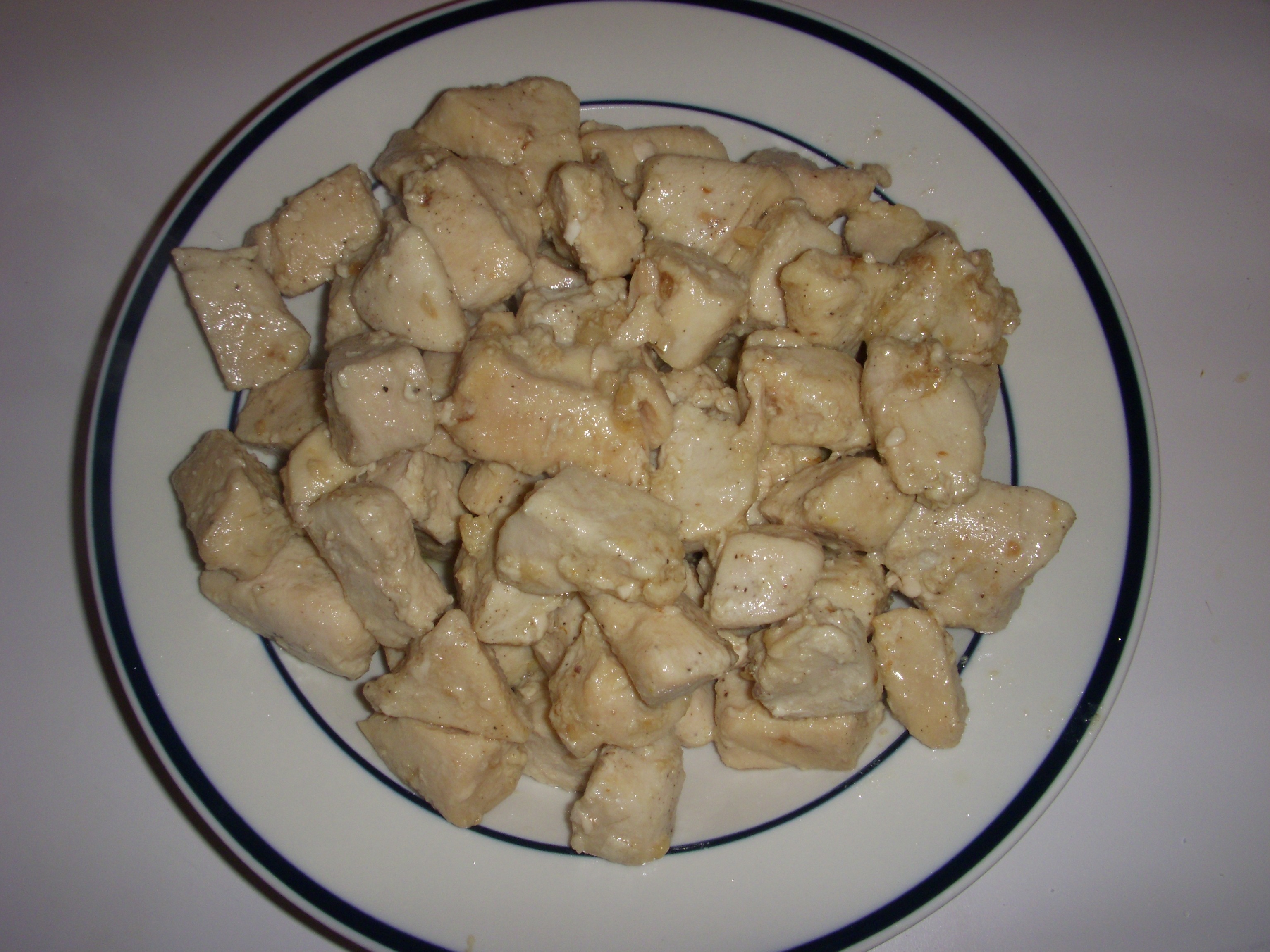
To cook the chicken, I heated up olive oil in a large and deep sautee pan with about a third of the minced garlic and tossed in the pieces of chicken. Make sure to season the chicken liberally with salt and pepper. When the pieces are almost cooked through, I pulled them off and moved them into a bowl. It’s ok if they’re still slightly underdone, as they’ll be added into the sauce later and cooked through some more.

Cook the chicken first, then set aside in a bowl

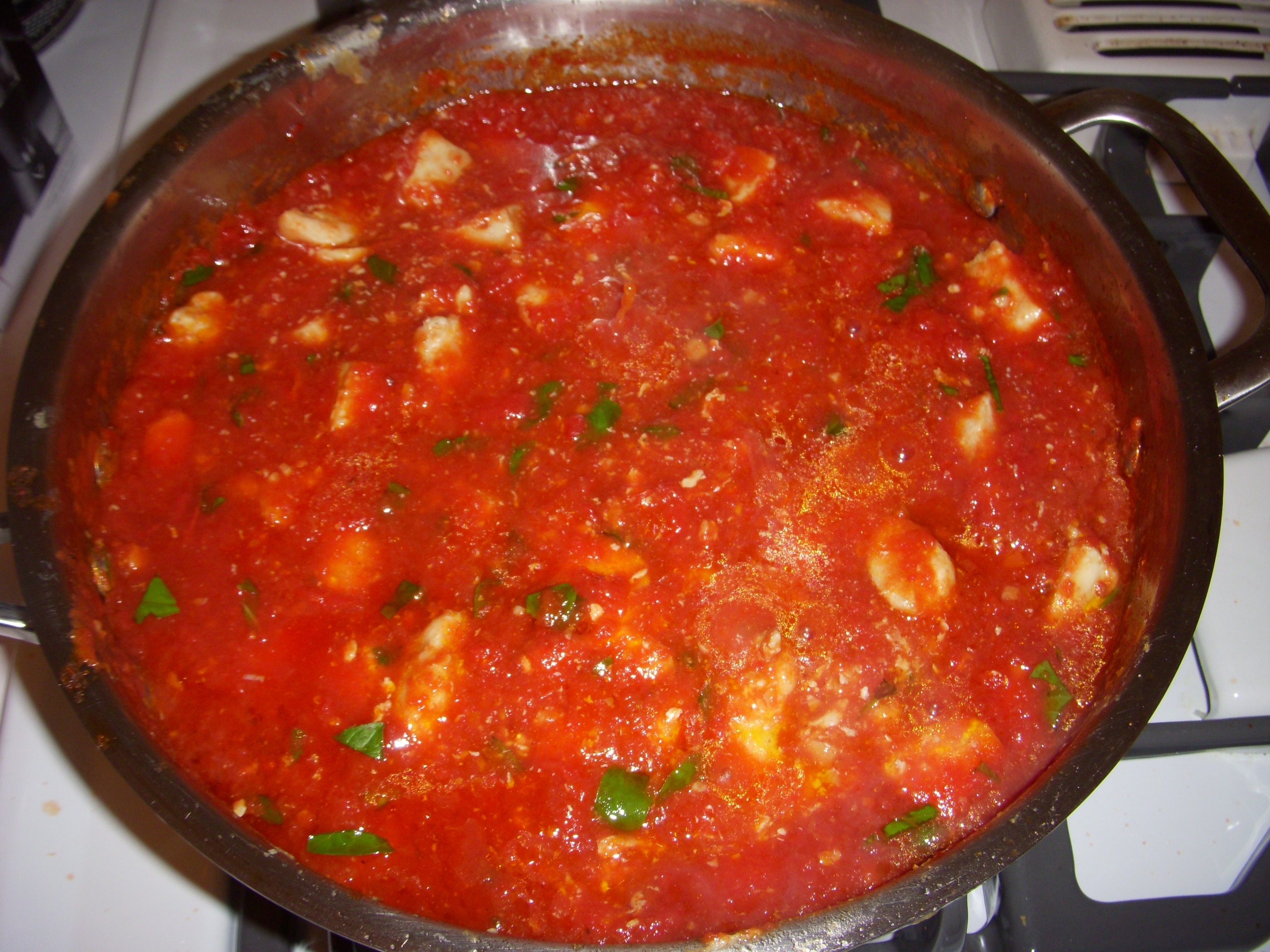
Using the same pan, heat up some more olive oil on medium heat and throw in the rest of the garlic. Add a pinch or two of red pepper flakes, depending on whether you want the dish to be spicy (or you can leave that out altogether). After the garlic is just starting to brown, add a 28 oz can of crushed tomatoes and cook until simmering. Season the tomato sauce to taste with salt/pepper/thyme. When the sauce starts to bubble a little, pull the pan off the flame and carefully add in one cup of vodka. Place the pan back on the stove and mix the vodka around in the sauce, letting it bubble away. I threw the chicken back into the sauce at this point, and started cooking the pasta in the boiling water as well.

Simmering the tomato sauce with vodka

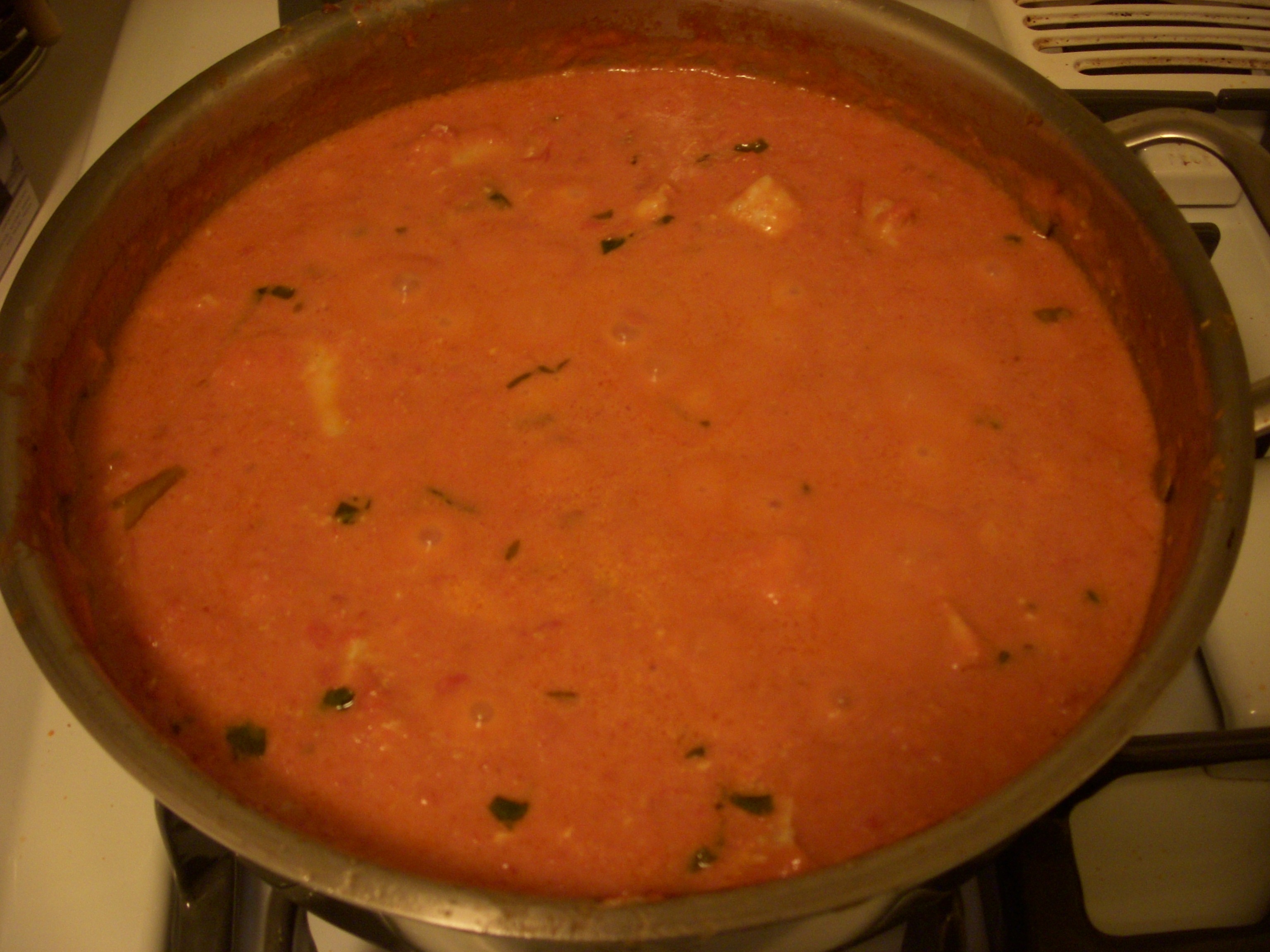
Cook the sauce long enough so that the flavor of the vodka stays but the bite of the alcohol is dissipated. At this point, cut the basil into small strips and add it into the sauce, then pour in one cup of heavy cream. Stir the sauce until the cream is combined, and the sauce takes on a nice pink hue. I let that reduce a bit so the sauce is rich and creamy, but not super thick. Take the time to taste the sauce and season it one more time.

Add the heavy cream and reduce until the sauce is rich and slightly thicker

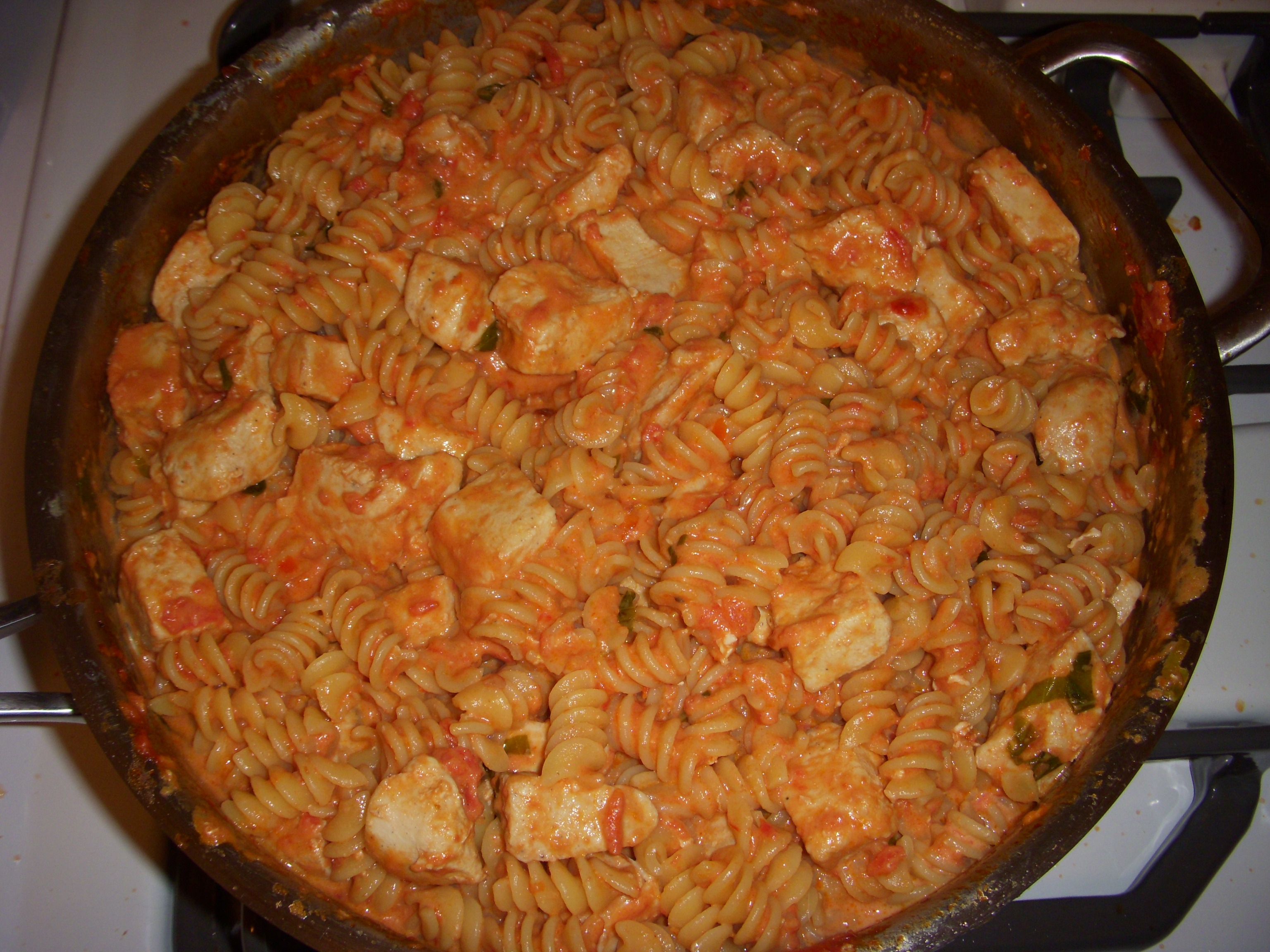
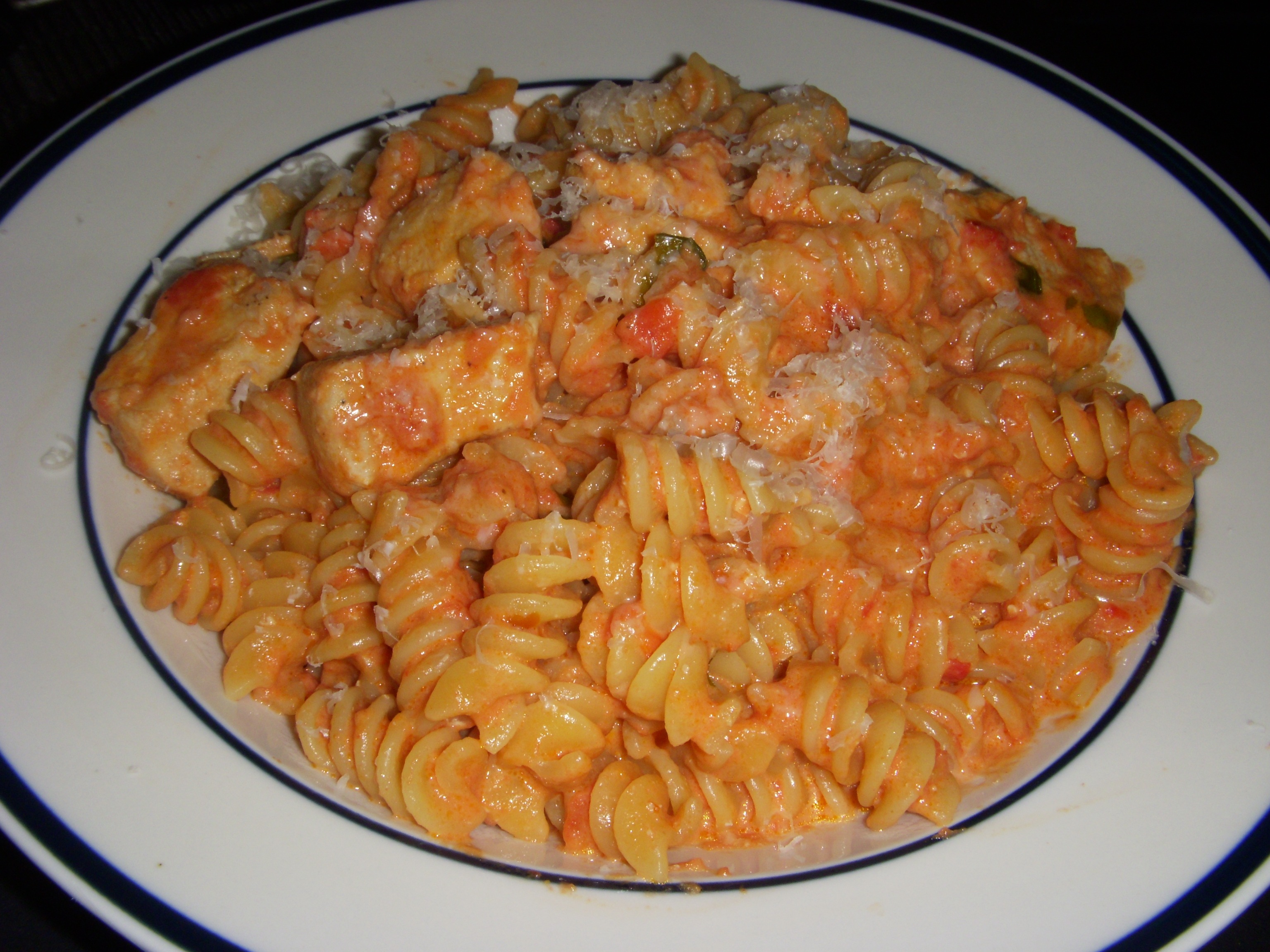
Drain the pasta and toss it directly into the sauce (this is why I use a large and deep sautee pan for the sauce). I used rotini this time, but my preference is farfalle. Basically any shape of pasta that has a few grooves is fine (so not spaghetti or linguini), as they help the sauce cling better. I tossed everything together to incorporate the sauce and disperse the chicken pieces evenly throughout.

Add in the cooked pasta and toss everything together

Finally, I scooped out a portion into a bowl and topped it with a sprinkling of grated parmesan cheese. Yum!

Pasta with pink vodka sauce and chicken, topped with grated parmesan cheese

Like I’ve said, I don’t really measure things out when I cook so none of the ingredients have exact measurements. If you like garlic, add more garlic. If you don’t like the flavor of vodka, use less. If you like the sauce to be thicker and richer, use more heavy cream. It’s a pretty basic “recipe” and can be altered at any point to suit your own taste. As for me, I had a big pot of rich and comforting pasta to last me the week, and it was much better than eating freezer burned pizza.

Quick French Dip

Monday, January 18th, 2010 by virginia

After our Secret Santa dinner we had tons of leftovers, including an entire 2lb cooked and uncut london broil. Josh and I don’t exactly understand restraint when we host dinners so we always go a tiny bit overboard in terms of the amount of food we get. The leftovers were good because I didn’t have to worry about what to bring for lunch the next two weeks, but I didn’t want to reheat the london broil since it’s a pretty tough cut of meat to begin with. I thought of slicing it up cold and laying it on top of a salad but that seemed a bit boring. Then I was struck with the idea of making a steak sandwich, specifically a french dip, so that the heat of the dipping broth would warm up the meat a bit without overcooking it.

Josh picked up some bread from Amy’s Bread on his way home, a rustic loaf with a sturdy crust and caraway seeds. The texture of the loaf and crust were really nice but I wasn’t a fan of the caraway seeds. The bread held up well though against all the sandwich fillings and the dipping sauce.

Sliced london broil, caramelized onions, and melted swiss cheese on rustic bread

To prepare the sandwich, I first sliced up a medium onion and caramelized it in a pan. Then I split the bread open lengthwise and placed a few slices of swiss cheese on each side. I melted the cheese under the broiler so that it was soft and just starting to brown, and the crust of the bread got a bit toasty. I placed thin slices of the london broil on one side and piled on the caramelized onions on the other side.

Constructed sandwich with extra caramelized onions on the side

For the dipping sauce, I went the quick and easy route with Lipton’s french onion soup mix. Just follow the directions on the package. I boiled it down a bit so that the flavor would be more concentrated. The sandwich was really thick and hearty, and dipping it into the soup softened it up a bit and helped provide some extra flavor.

Lots of french dipping action

I was actually really happy with how the quick french dip turned out. The key was to slice the london broil really thinly, so that it stayed tender. It was a great way to use up a lot of the leftover steak, and the sandwich was a nice mix of flavors and textures. It’s definitely something that I would make again, and maybe not even just with leftovers. It was quick and easy to make, and it turned out to be a tasty and filling dinner.

Amy’s Bread (multiple locations)
672 9
th Ave. between 46th and 47th St.
New York, NY

Secret Santa Dinner

Sunday, January 10th, 2010 by virginia

Josh and I hosted our first dinner in our (not so new anymore) apartment, a gathering with some friends to do a Secret Santa exchange. Our menu was somewhat of a traditional holiday meal, which featured a roasted turkey, mashed potatoes, gravy, and cranberry sauce. We also made marinated and broiled London broil, sautéed green beans with garlic chips, roasted asparagus, Caesar salad, and potato zucchini kugel.

Our full holiday dinner table (not a great shot unfortunately because we were too busy setting everything up)

We’ve never roasted a turkey by ourselves before and knew that we wanted to brine it first, since we’ve read that it really helps keep the meat moist and flavorful. Finding a non-kosher, non-butterball turkey was actually kind of hard, and we went to several supermarkets before we finally found one that suited our needs. I forget what brand it was but it was frozen and cheap, weighing in at almost 13 lbs. Following a recipe from Cooks Illustrated, we let it defrost for a day, then soaked it in a simple brine made from two gallons of water and two cups of salt. Seriously, that’s it. It was really easy – the hardest part was finding a tub big enough to hold the turkey and brine but small enough to fit in our refrigerator.

Turkey brining in salted water

After brining the turkey for four hours (that’s all it needed!), we set it on a v-rack uncovered in the fridge to dry out the skin. This helps the skin get more crispy during roasting, but you don’t have to do it if you don’t mind soggier skin.

Turkey hanging out in the fridge to dry over night (for some reason our turkey was missing a chunk of skin on the breast!)

To prepare the turkey, we simply put carrots, celery, onions, thyme, and melted butter into the body cavity, then tied the legs together. We put the same mix of vegetables into the bottom of the roasting pan with some water. Then we brushed melted butter over the entire turkey.

Trussed turkey ready to go into the oven

We cooked the turkey according to the directions from the Cook’s Illustrated recipe for classic roast turkey. This involved rotating the turkey every so often so that it cooks more evenly. The total cook time is approximately two hours, so it’s really not that difficult or time consuming to make a roasted turkey!

The result? A golden turkey that was super moist and flavorful. The skin didn’t get as crispy as we would have liked but the rest of the bird was perfect. It was really juicy and the meat was seasoned the whole way through. Seriously, everyone should brine their turkeys from now on! Our cheap bird ended up tasting divine, and we were both thrilled with the results.

Golden turkey right out of the oven

Although there weren’t enough pan drippings to make a gravy, fortunately we had saved all the giblets and innards, which Josh sauteed with some onion to develop the flavor. He made a gravy using those giblets, the vegetables from the turkey roasting pan, some chicken stock, and white wine. The gravy was thickened with a simple roux of butter and flour, and it was one of the best gravies I’ve ever tasted.

For the London broil, we bought two steaks that were a little less than 2 lbs each. We marinated each steak separately in large Ziploc bags overnight. First we liberally sprinkled salt, pepper, and garlic powder on each side of the steaks and rubbed it in a bit before placing them inside the bags. Then we just poured the marinade ingredients into the bags directly. The marinade for each steak included a 12 oz bottle of beer (any kind, we used a cheap one so that we wouldn’t waste a good beer), a healthy drizzle of soy sauce, a few dashes of Worcestershire sauce, a squirt of sriracha (we like a little spice but you can omit this if you don’t want any heat), and two crushed cloves of garlic. Close the bags and leave a bit of air so you can squish everything together until the marinade is combined and coating the pieces of steak. Then open the bag a tiny bit, squeezing excess air out until the marinade sticks to the steak more closely. At that point, reseal the bag the whole way and place the bags in a container to catch any leakage and place it in the fridge to marinate overnight.

London broil marinating in ziploc bags

To cook the steaks, place them on a big flat sheet pan that’s covered in foil for easy cleanup, pour some marinade over the top, and place it directly in the oven under the broiler. The steaks cook for about 10 minutes on one side and slightly less on the other side (we like our steak to be rare). When you flip, pour some more marinade on the other side. They’ll form a nice brown outer crust and are still pink in the middle. Slice it thinly on the bias, against the grain. This is a cheap cut of meat so it can be a bit tough, marinating the steaks overnight and slicing it thinly really helps make it much more tender.

My proudest contribution was the potato zucchini kugel. I followed this recipe, and it really was so simple to make and very delicious. I grated the potatoes, zucchini and onion by hand, which was the part of the recipe that required the most work, but I thought it was easier than using a food processor and trying to do everything in batches.

Grated potatoes, zucchini, and onion

I had made kugel only once before, a potato kugel for Rosh Hashanah dinner at Josh’s house, but I thought the zucchini really added a lot more to the dish. The zucchini made the kugel taste lighter and fresher, and this is the version that I’ll be making from now on.

Potato zucchini mixture ready to go into the oven

The other sides were pretty much no-brainers. Mashed potatoes = easy; boil peeled potato chunks + butter + cream + salt + pepper.

Cranberry sauce = 1 can of Ocean Spray cranberry sauce + 1 can Dole pineapple chunks, crushed; combine and mix together.

Sauteed green beans = sautee a few cloves of chopped garlic in olive oil + throw in washed green beans with ends trimmed; sautee until tender but still crunchy.

Roasted asparagus = washed asparagus with tough ends snapped off + drizzle of olive oil + chopped garlic + salt + pepper + grated parmesan cheese; rub the oil and seasonings over the asparagus and spread out the spears on a large flat baking sheet, roast at 400 degrees for 10 minutes until tender but still crunchy. Remove from oven and grate parmesan cheese over the top.

We also made a Caesar salad with homemade dressing, but I’ll do a post on that at a later time. Caesar salad topped with homemade croutons and some sort of protein is one of our favorite quick suppers.

London broil, asparagus, green beans, mashed potatoes, cranberry sauce, potato zucchini kugel, turkey

In the morning, Josh and I had created of schedule of when we needed to start prepping certain dishes and when they needed to be cooked. It got a bit hectic towards the end but we managed to finish on schedule. Our tiny kitchen was a disaster, but we really had a fun time with the dinner and the Secret Santa exchange. Both of our Santas knew us all too well. I got a gift certificate to Becco, my favorite restaurant, and Josh received a bottle of wine and a Vinturi wine aerator. All of those will be put to good use, for sure. Thanks, Santas! And we hope that everyone had a wonderful holiday season!